Which Polycarbonate Should I Pick for My Awning?
Choosing the best polycarbonate for your awning makes the difference between a cool, comfortable space and a hot, glary one. You can install an awning over a door, window, or outdoor area and still end up with poor performance if you select the wrong polycarbonate. An awning frame may stop the rain, but the polycarbonate sheet you choose determines how much heat, light, and comfort you actually get underneath the awning.
Choosing the wrong polycarbonate can unintentionally increase heat build-up, create glare, or make the area beneath the awning uncomfortable — especially under Australia’s harsh UV levels. Choosing the right polycarbonate, however, can significantly reduce solar heat, control light levels, and improve year-round usability.
At Eco Awnings, we use twin-wall polycarbonate that we specifically select for awning applications. Different polycarbonate colours and finishes behave very differently in heat reduction, light transmission, and visual appearance. As a result, the choice matters just as much as the awning design itself.
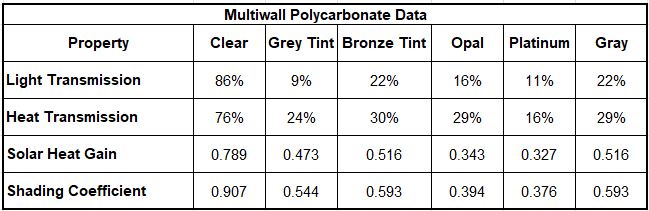
Manufacturers design some polycarbonate options as solar control sheets that reduce heat under the awning. Others allow more natural light through but offer less heat reduction. For example, Platinum and Opal polycarbonate are solar colours that reduce heat and glare. Grey and Bronze polycarbonate allow more light through but do not reduce heat as effectively. Clear polycarbonate provides the highest level of light transmission, but it also produces the greatest temperature increase beneath the awning.
This guide explains the different twin-wall polycarbonate options, how each one performs, and how to pick the best polycarbonate for your awning location and use.
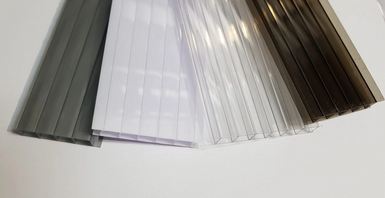
Platinum / Silver Polycarbonate – Maximum Heat Reduction and Cleaner Appearance
Platinum polycarbonate is a high-performance solar control polycarbonate that significantly reduces heat while maintaining comfortable light levels. In addition to its thermal performance, platinum polycarbonate has a light-diffusing finish that helps disguise everyday marks and debris.
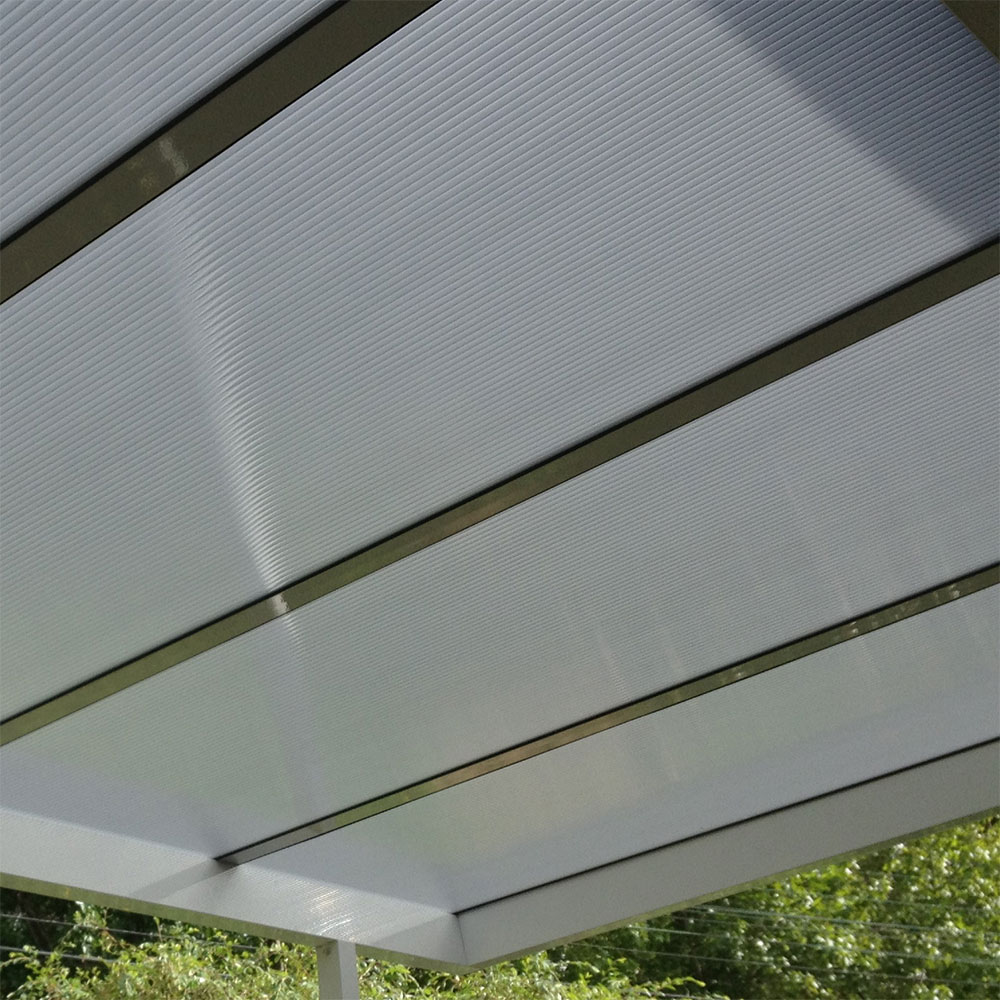
Because the surface diffuses light rather than allowing full transparency, dust, water marks, leaves, and general dirt are far less noticeable compared to clear polycarbonate. This means the awning maintains a cleaner, more uniform appearance for longer, and you clean it less often.
Platinum polycarbonate is ideal for:
- North- and west-facing awnings
- Doorways exposed to strong afternoon sun
- Areas where you want to minimise heat build-up
- Situations where long-term appearance is important
It is a popular choice for door awnings and window awnings where both heat control and low visual maintenance are priorities.
Opal / Solar White – Soft Diffused Light and Reduced Visible Dirt
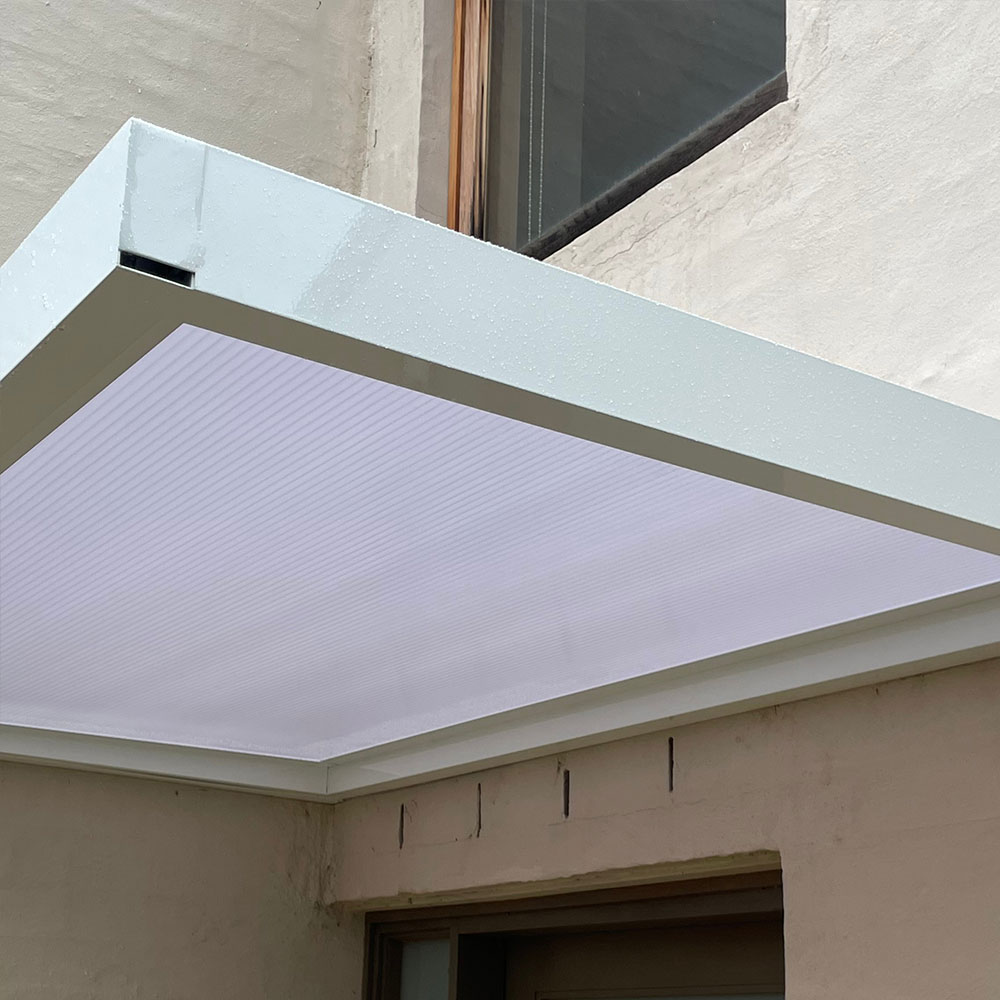
Opal polycarbonate is another solar control option that provides excellent heat reduction while producing a soft, evenly diffused light beneath the awning. The opal finish spreads light across the sheet, reducing glare and harsh shadows.
One of the key advantages of opal polycarbonate is its ability to hide surface marks and dirt. Because it is not transparent, water spotting, dust, and minor debris are far less visible. This helps the awning look cleaner and less tired over time.
Opal polycarbonate works well for:
- Entry doors where you want to control glare
- Windows requiring privacy
- Outdoor areas needing even light distribution
- Applications where a clean appearance with minimal upkeep is important
Clear Polycarbonate – Maximum Light, Maximum Heat, and High Visibility of Dirt
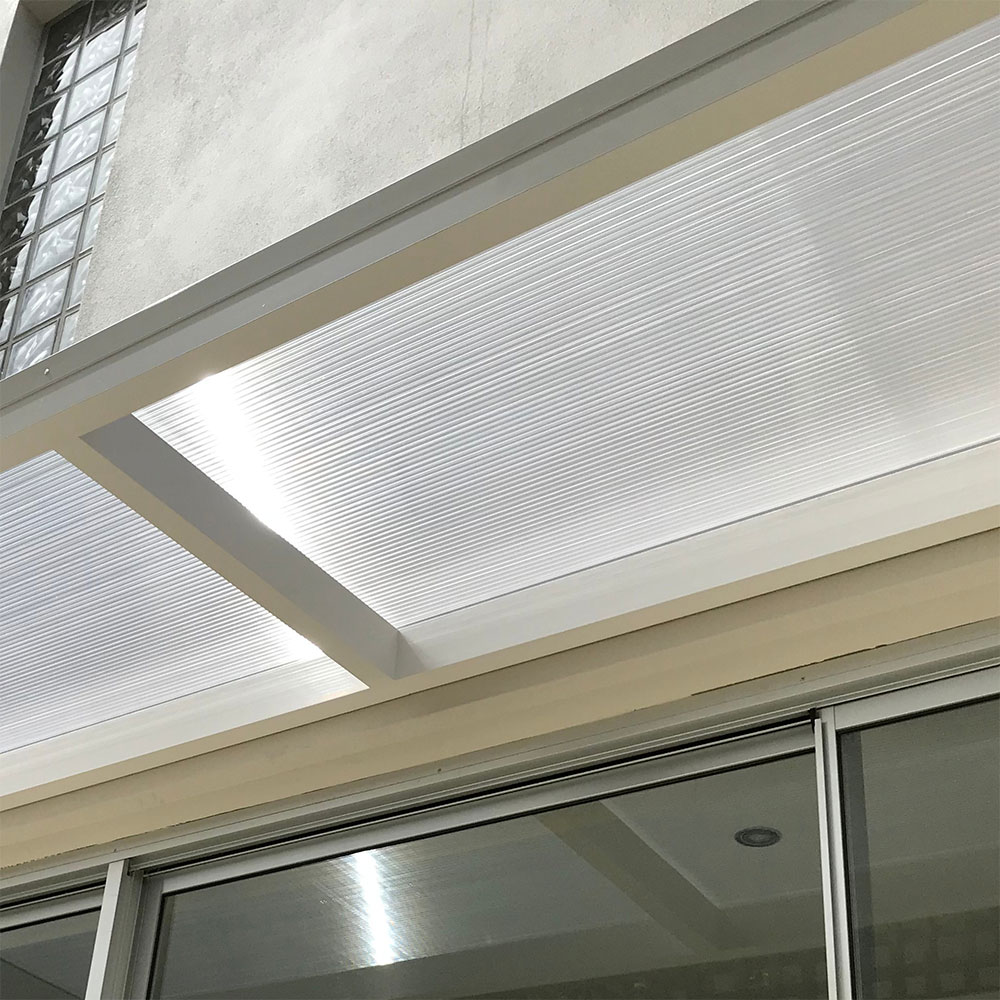
Clear polycarbonate allows the highest level of light transmission and full visibility through the awning. While it keeps rain off effectively, it offers the least protection from solar heat.
In addition, clear polycarbonate will show every mark on the surface. Dust, leaves, water spotting, pollen, and general grime all stand out clearly. This means the awning can look dirty very quickly, especially in outdoor environments. You can easily see any debris sitting on top of the awning from below.
Clear polycarbonate suits:
- Fully shaded locations
- Areas where you need maximum light
- Installations where visible debris does not affect the appearance
In sun-exposed areas, clear polycarbonate will both increase temperature beneath the awning and require more frequent cleaning to maintain a neat appearance.
Grey & Bronze Polycarbonate – Moderate Light with Visible Surface Marking
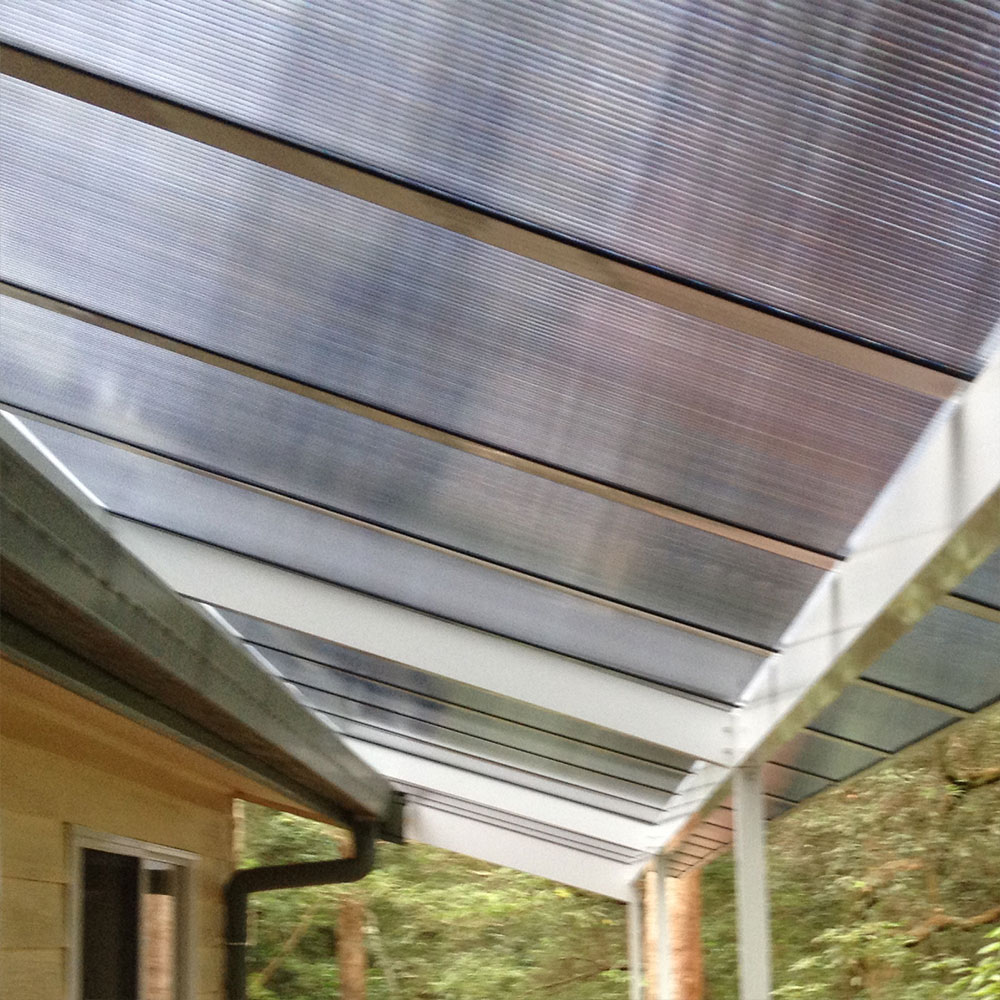
Grey and bronze polycarbonate sit between clear and solar control options. They reduce glare and soften light, but they still allow a relatively high level of visibility through the sheet.
Because these sheets are partially transparent, dirt and surface marks are still visible, although less so than clear polycarbonate. Heat reduction is also limited compared to platinum or opal options.
Grey and bronze polycarbonate work best where:
- Some shading already exists
- Light transmission is more important than heat control
- Visible debris matters less to the overall appearance
The Best Polycarbonate for Your Awning Balances Looks and Performance
When choosing polycarbonate for an awning, it’s important to consider not only heat and light, but also how the awning will look over time.
- Platinum and Opal polycarbonate reduce heat and hide dirt, keeping the awning looking cleaner for longer
- Grey and Bronze polycarbonate allow more light but show surface marks sooner
- Clear polycarbonate provides maximum light but shows every mark and increases heat
At Eco Awnings, we help customers pick the best polycarbonate for their awning based on sun exposure, usage, and long-term appearance. We fit every option across our custom-made window and door awnings, hand-built in our Sydney workshop. When you send us photos of your property, we can recommend a polycarbonate option that performs well and continues to look good over time.