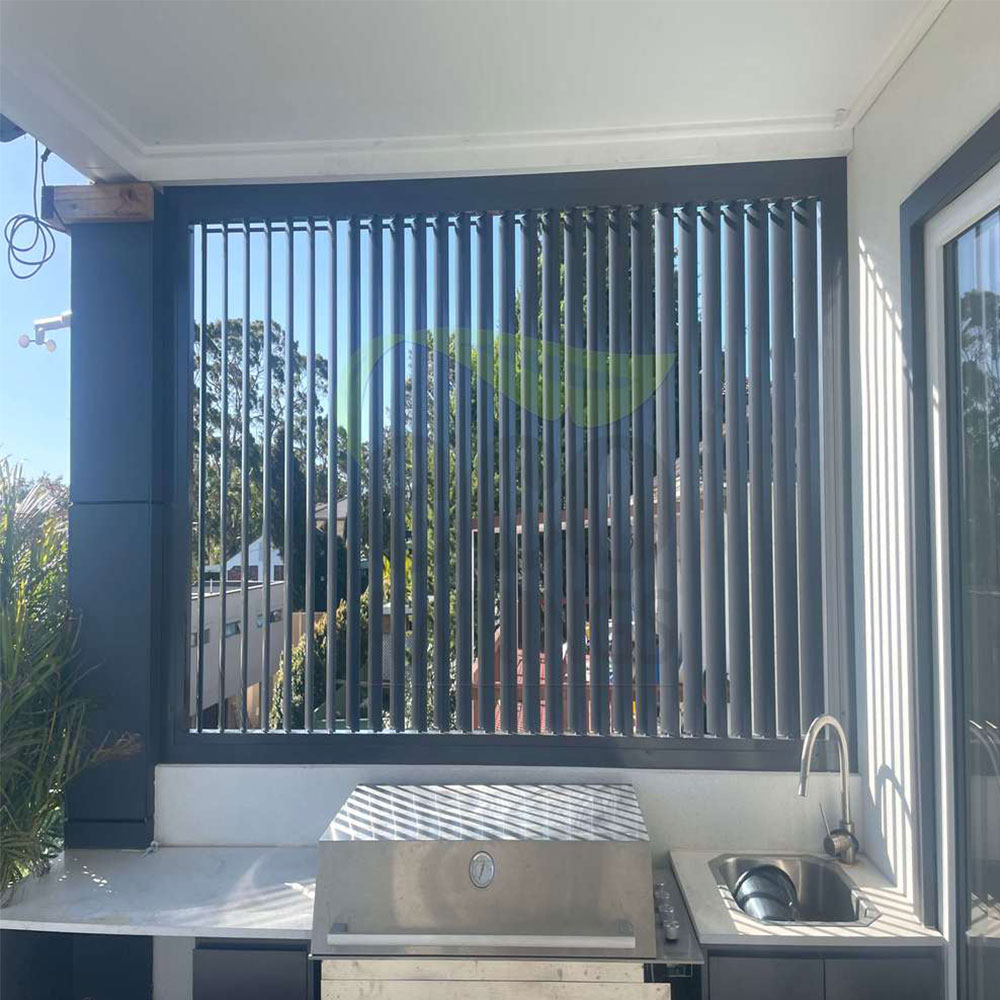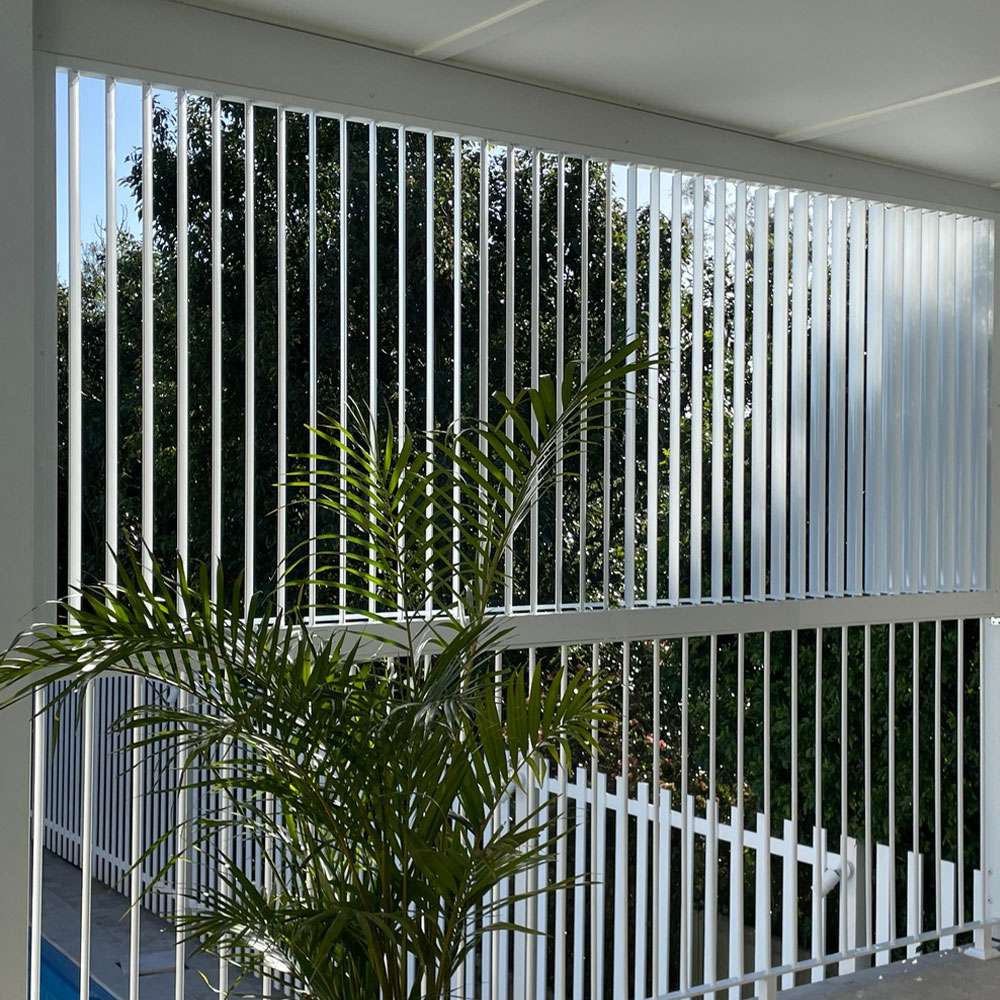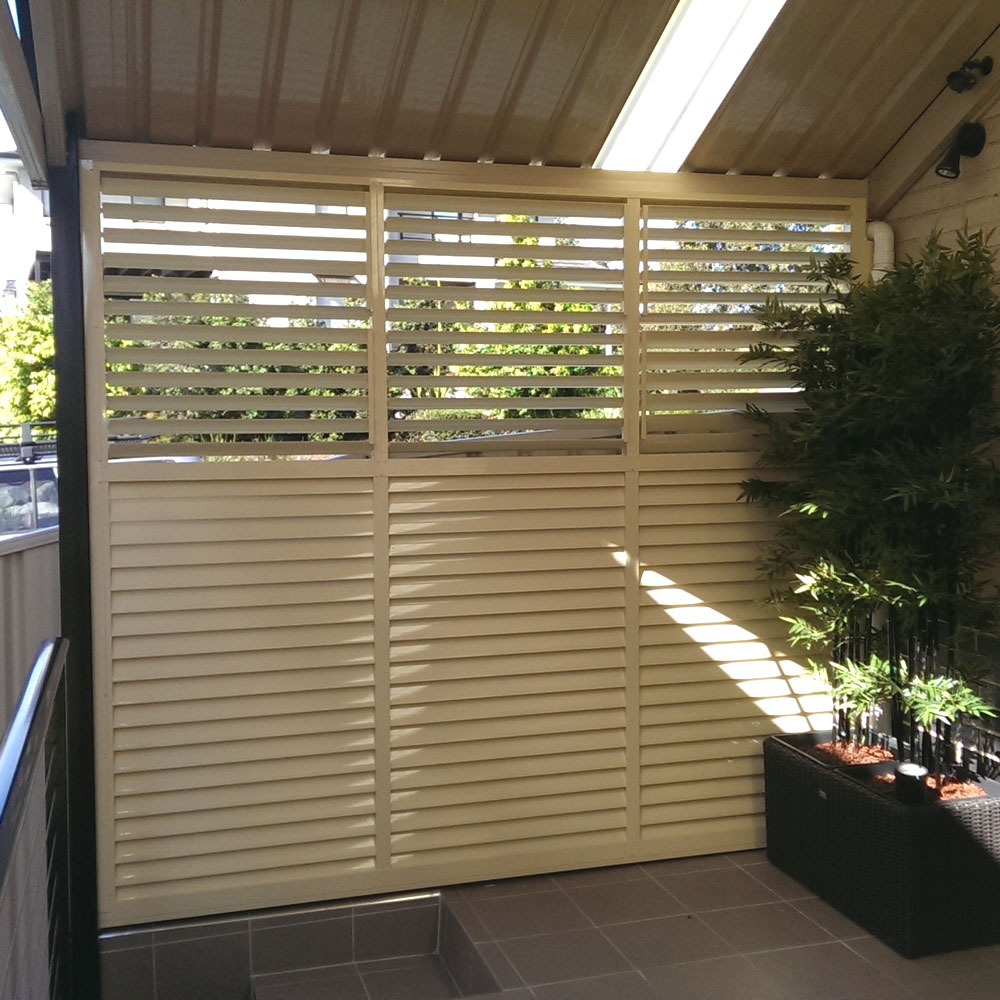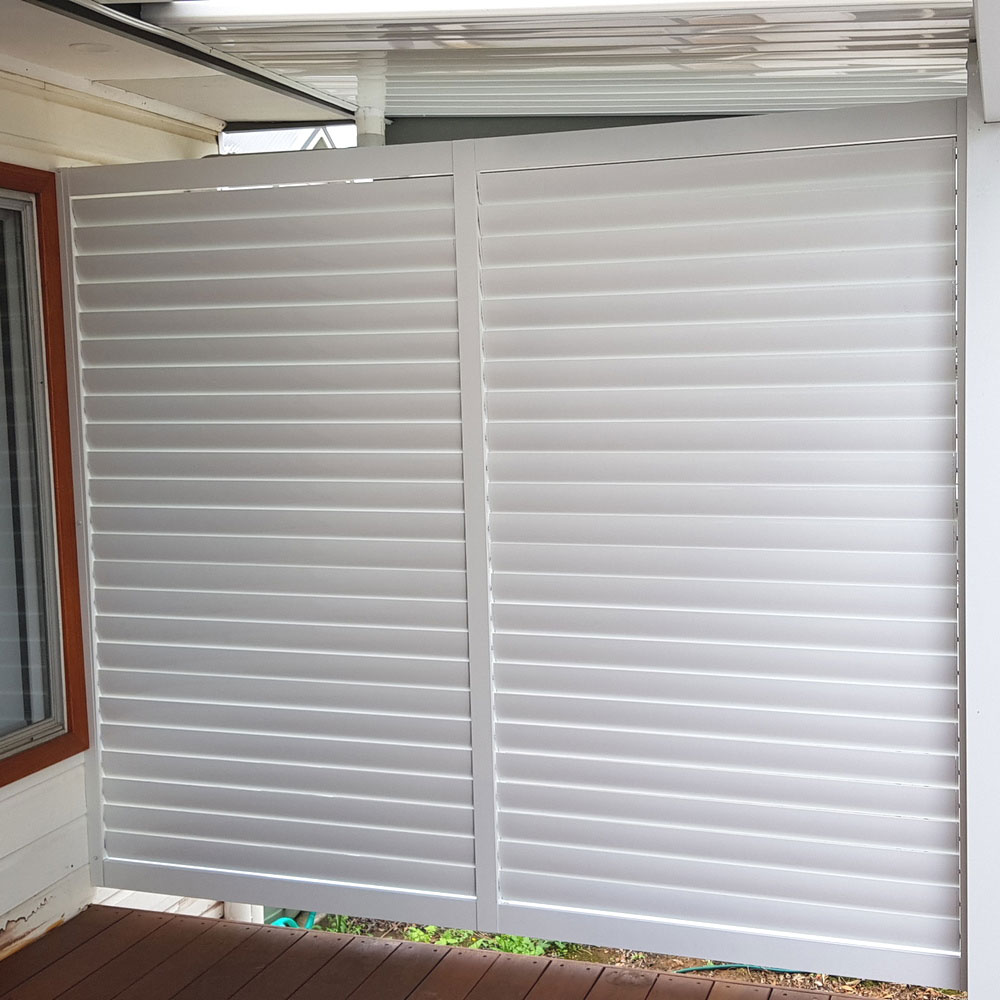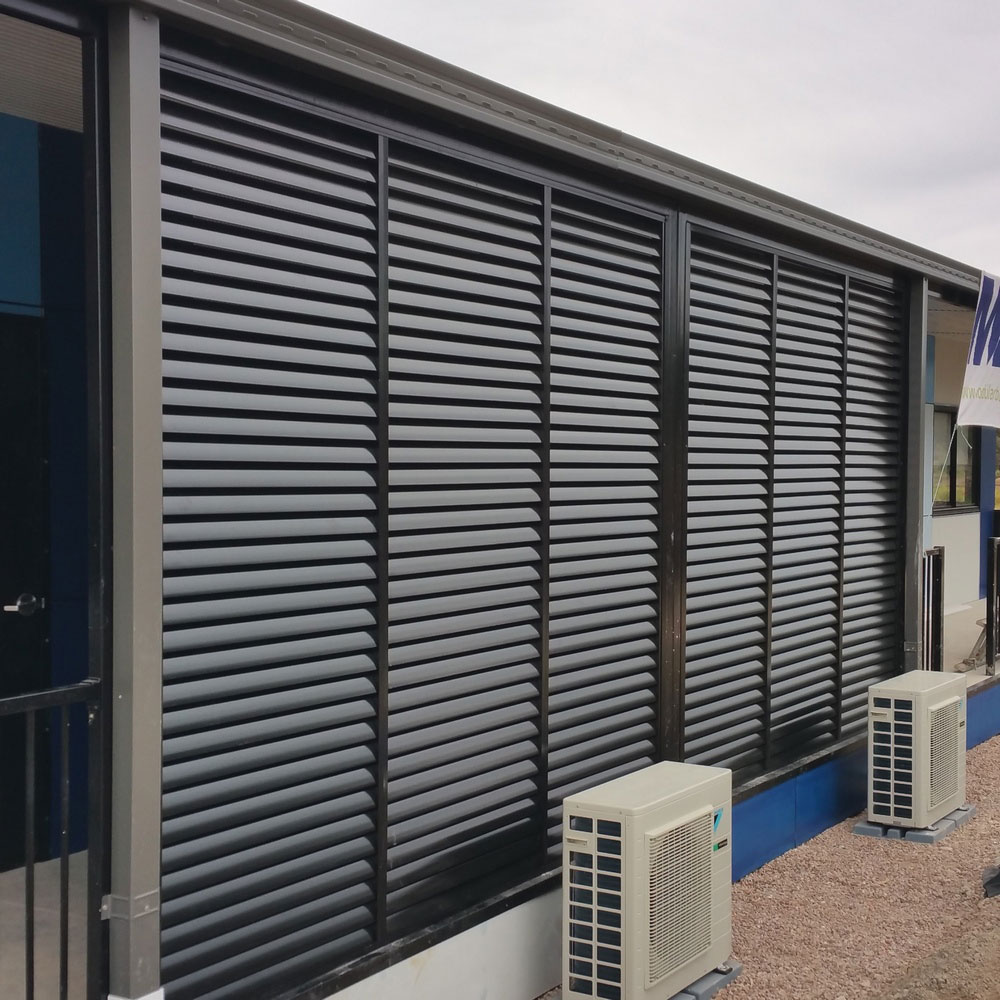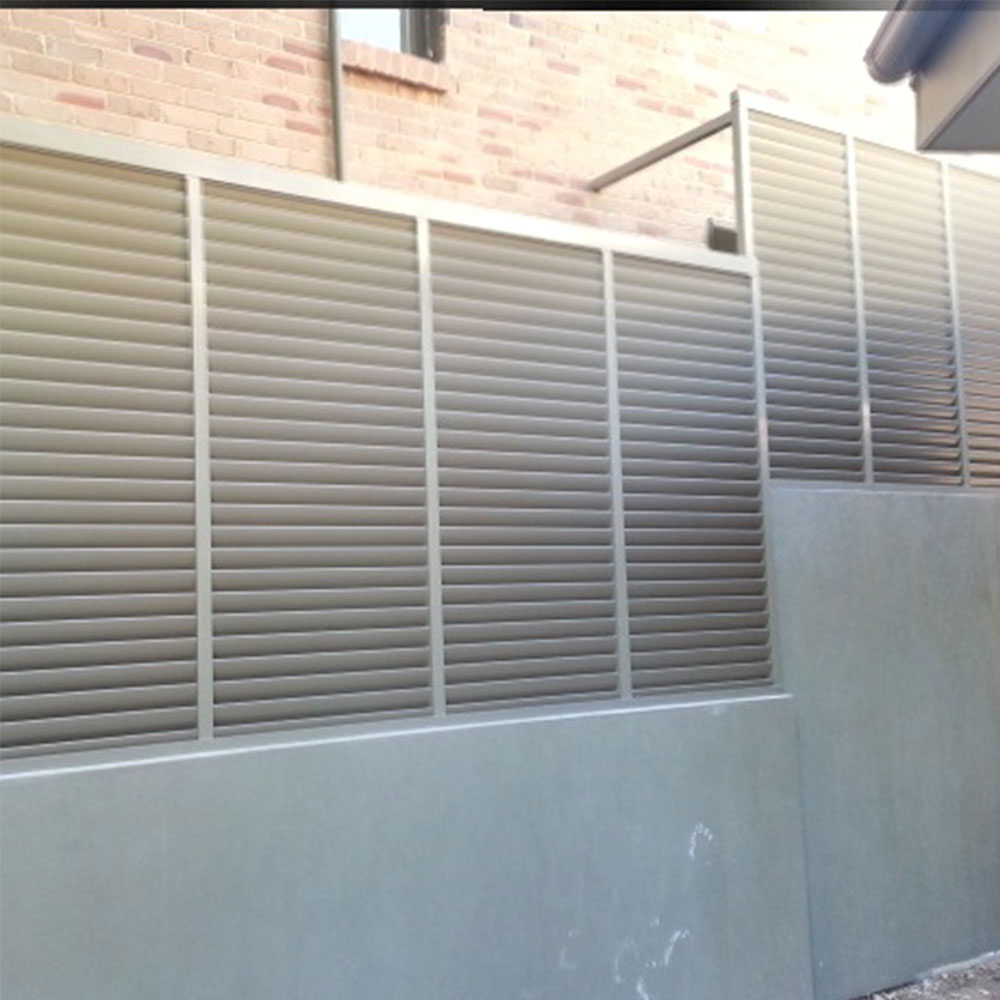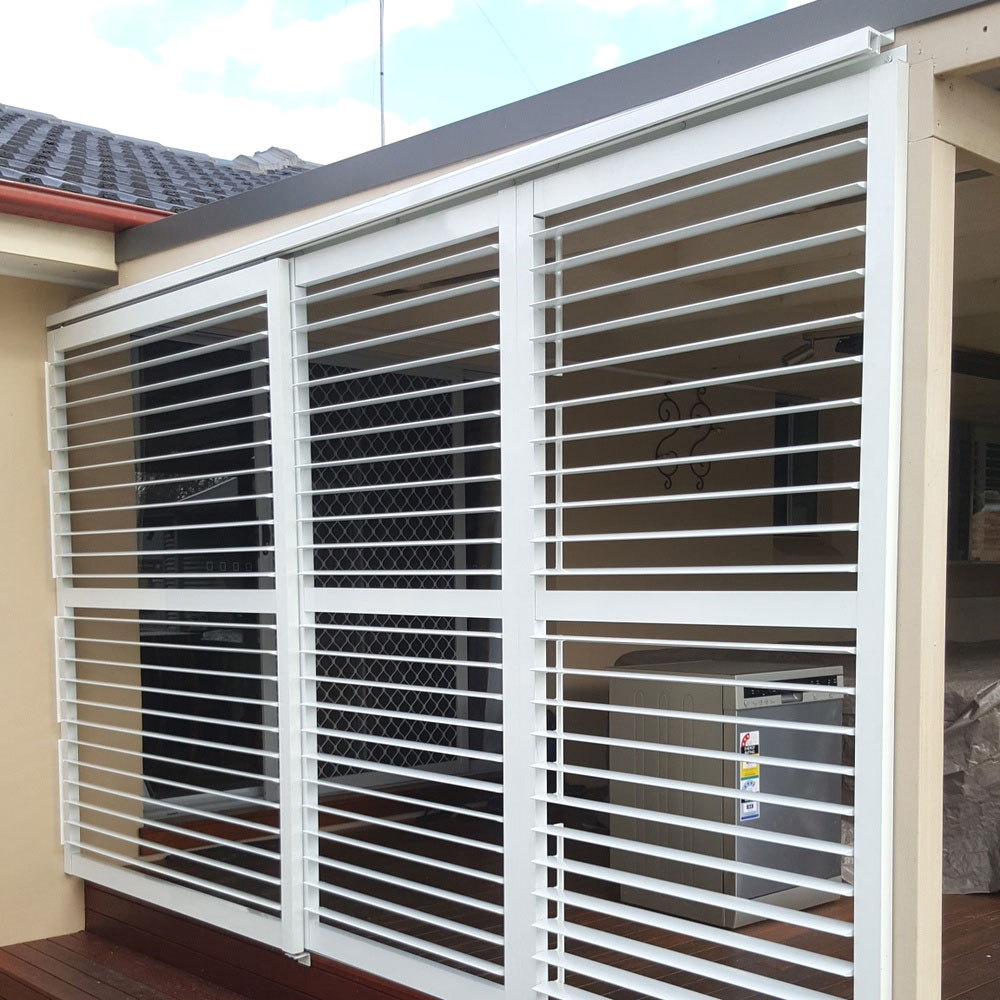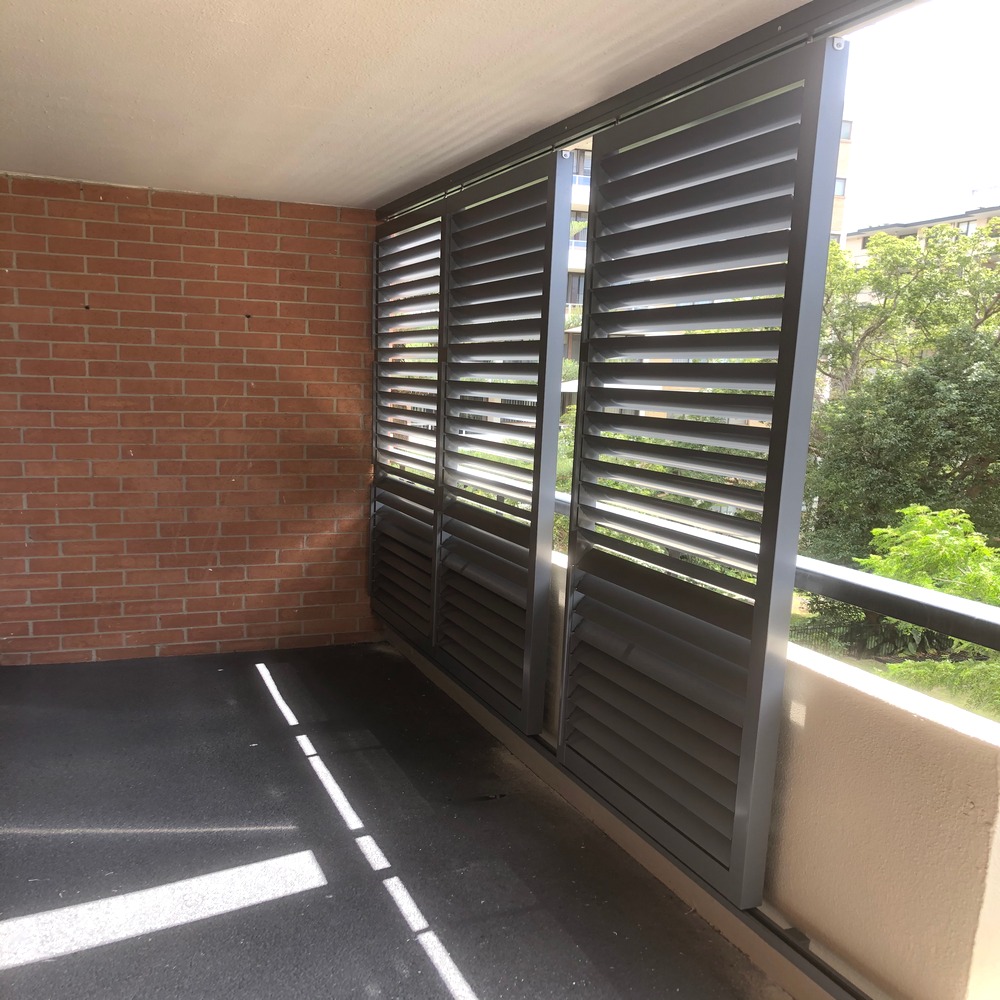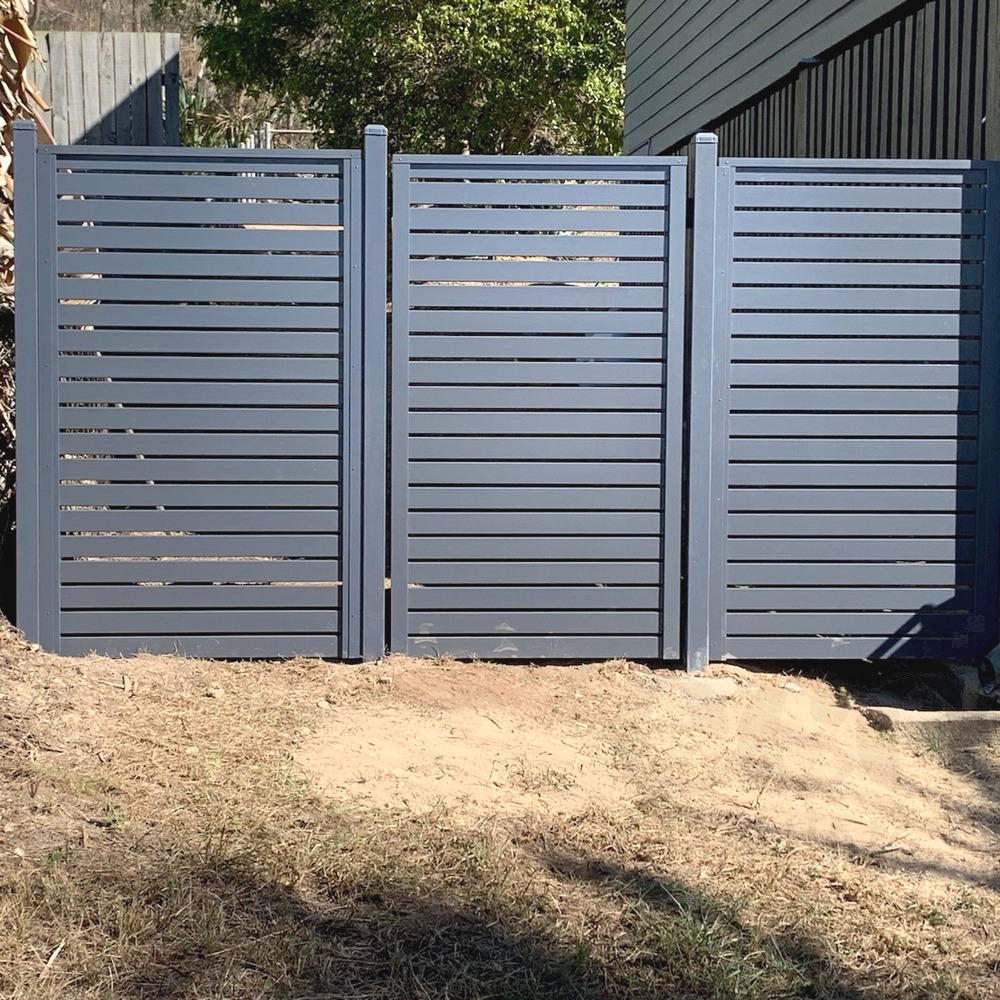
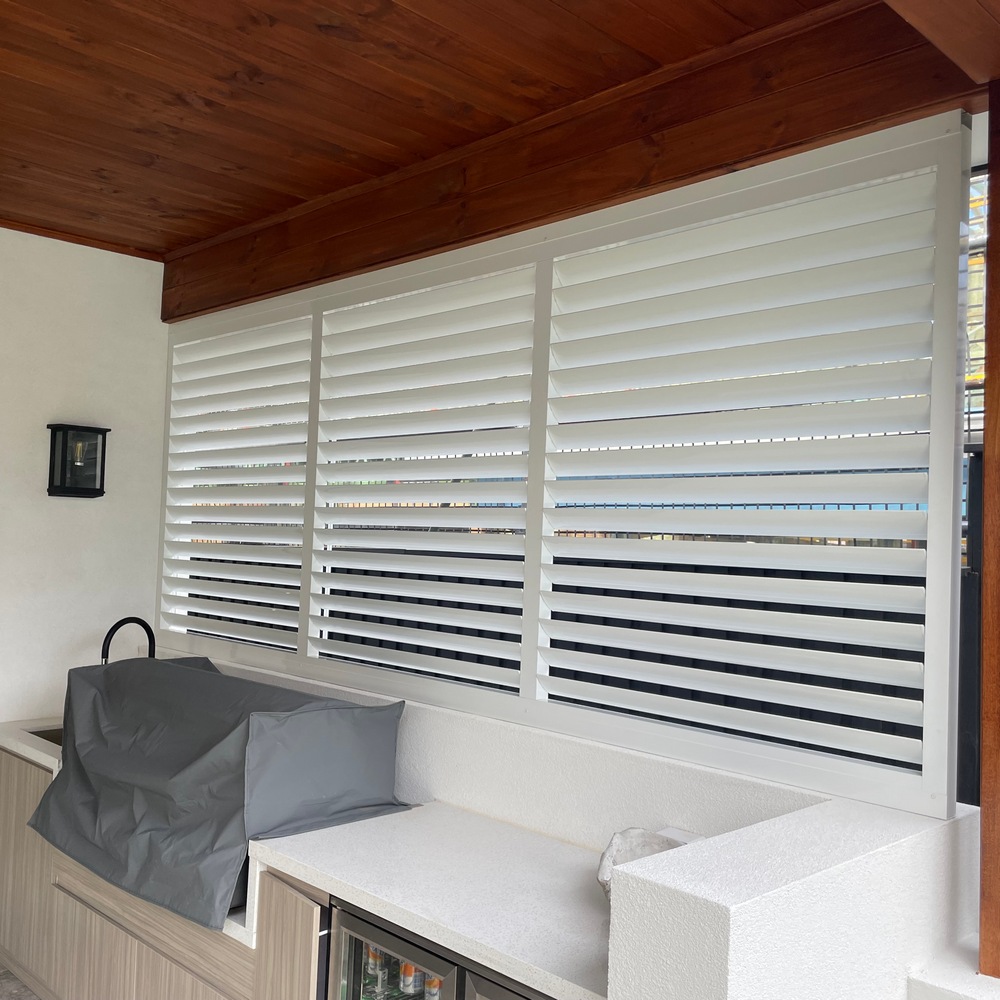

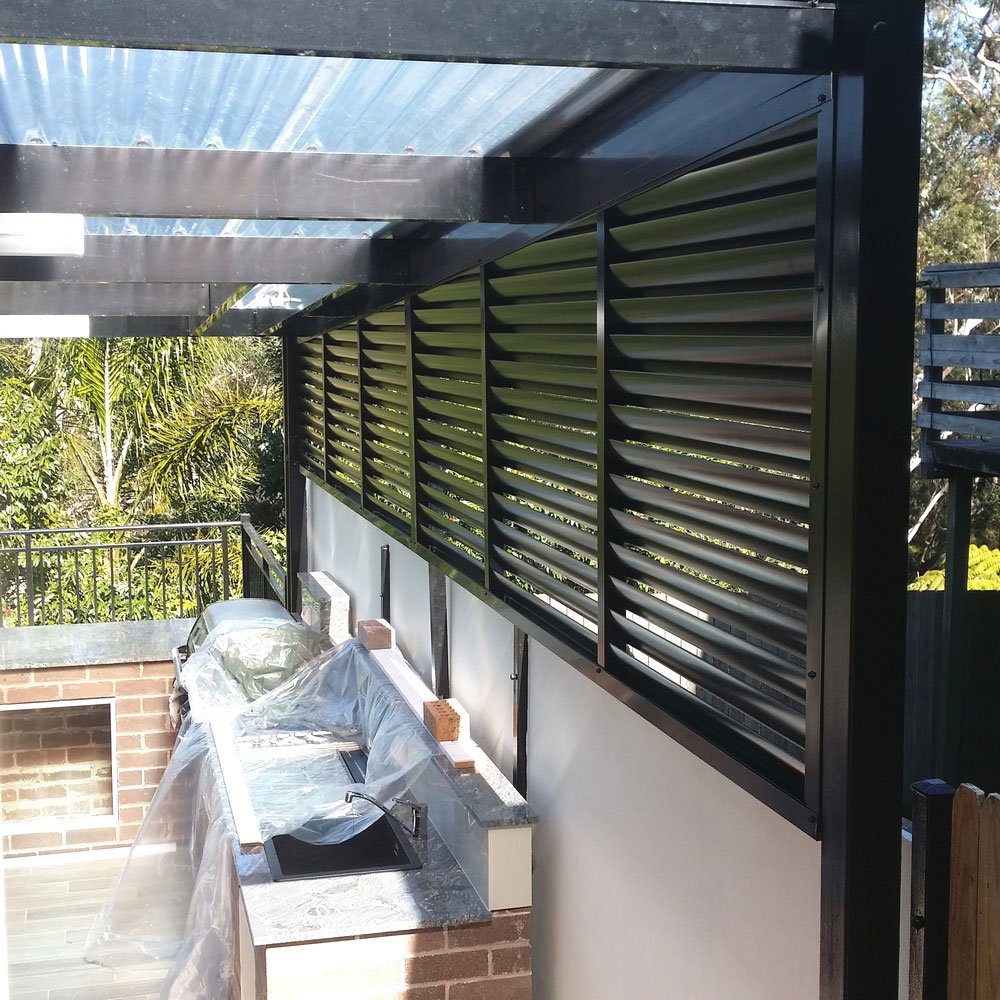
Privacy screen louvres Sydney – white adjustable blades screening an outdoor BBQ kitchen

Privacy Screen Louvres Sydney

Custom-Made Screens for Privacy, Airflow and Shade

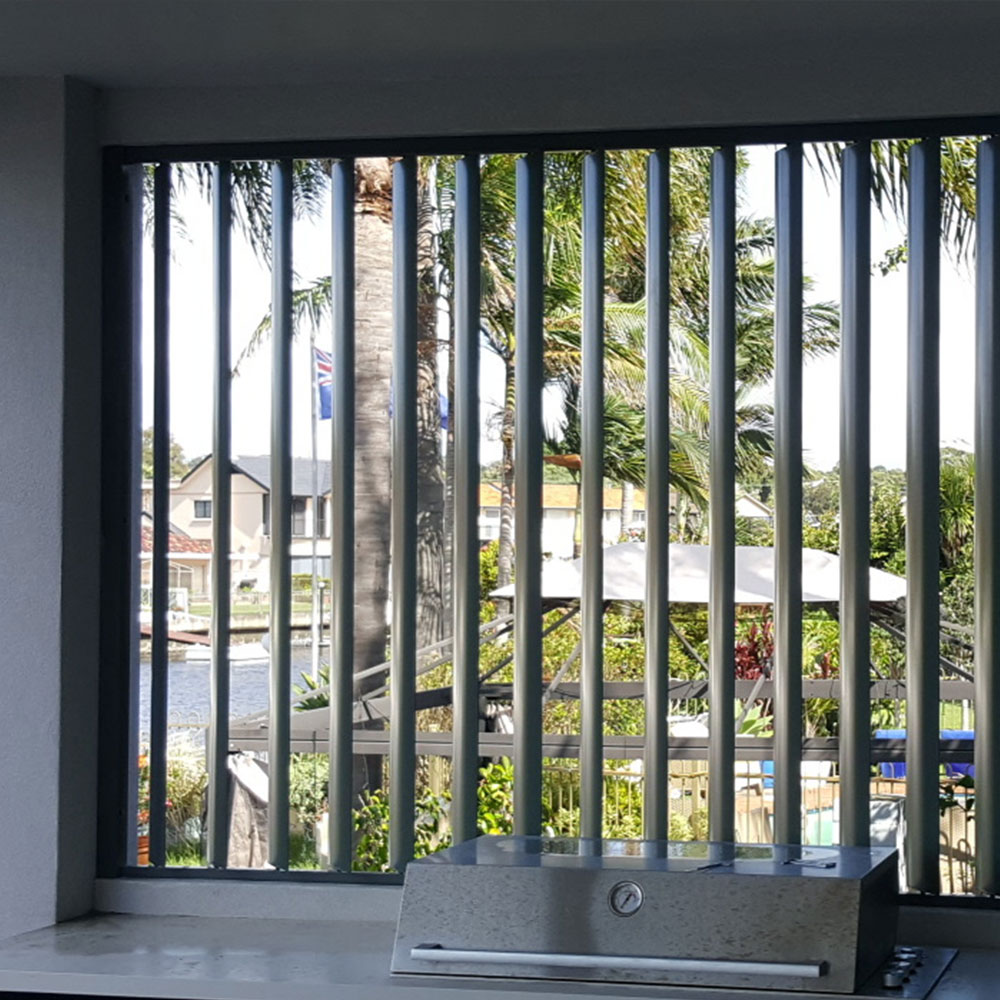
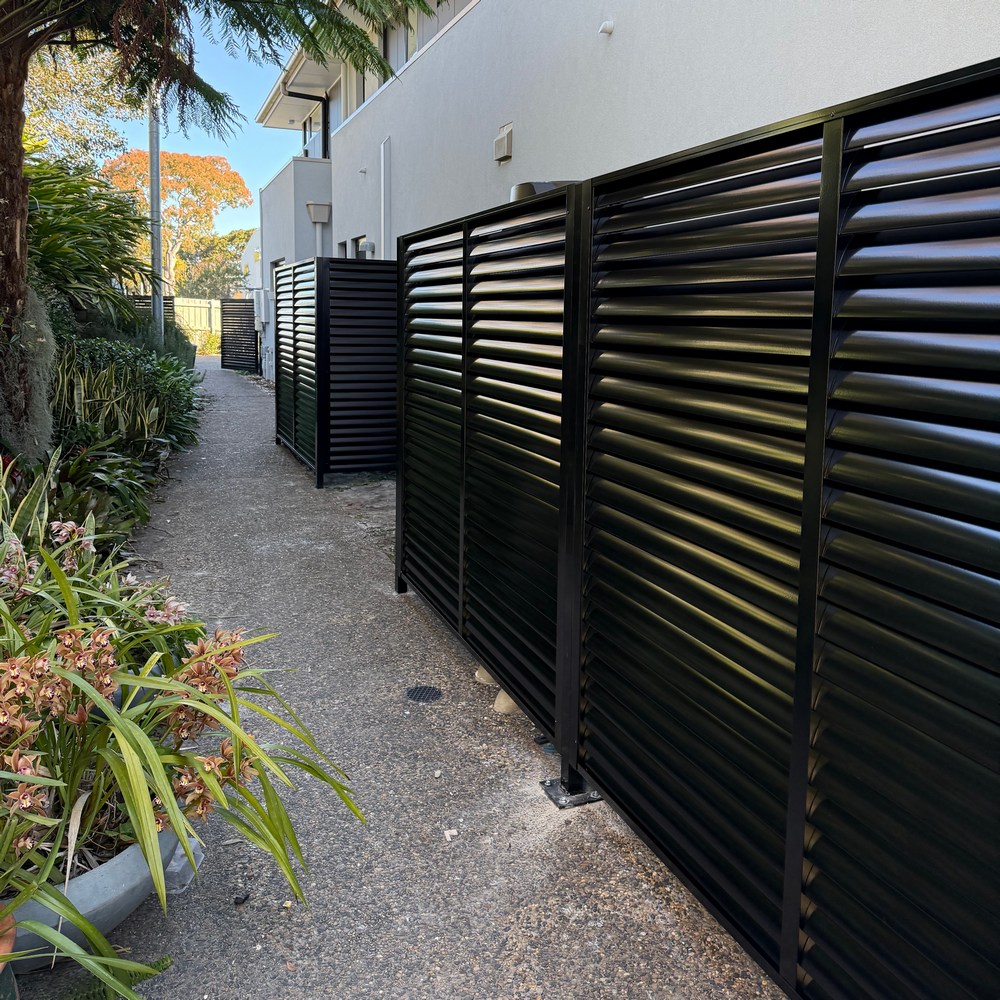
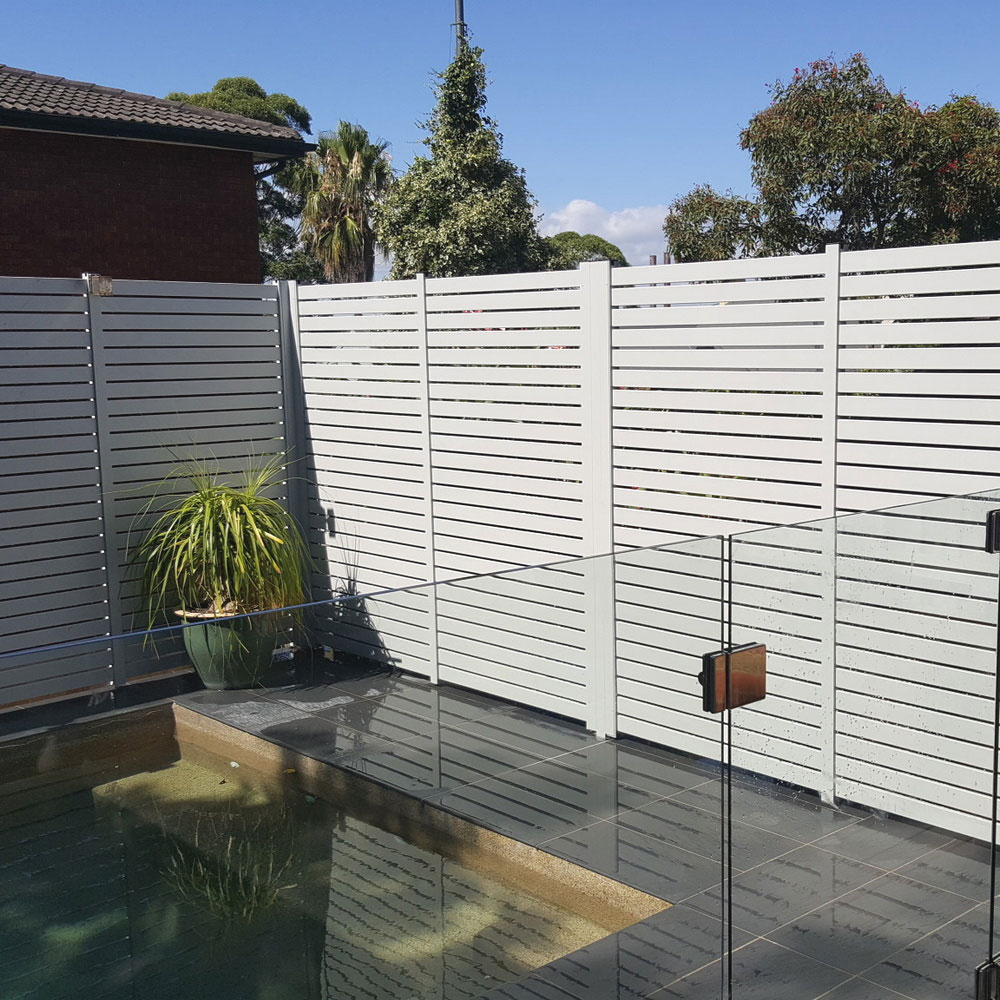
Our custom-made aluminium Privacy Screen Louvres offer the perfect solution for privacy, airflow, and modern aesthetics. Available with adjustable or fixed 85mm or 160mm elliptical blades, each screen is made to order for easy installation by your builder or installer. We can custom make to suit your veranda or outdoor area, and supply all the required fixings for a straightforward, professional result.
Adjustable or Fixed Aluminium Blades

Adjustable blades for privacy and light control, or fixed blades for a permanent architectural feature.

85mm or 160mm Elliptical Profiles

Durable aluminium blades with a sleek finish, for residential and commercial projects.
Custom-Made to Suit Your Space

Made to match your project, with full compliance to BASIX and council privacy requirements.
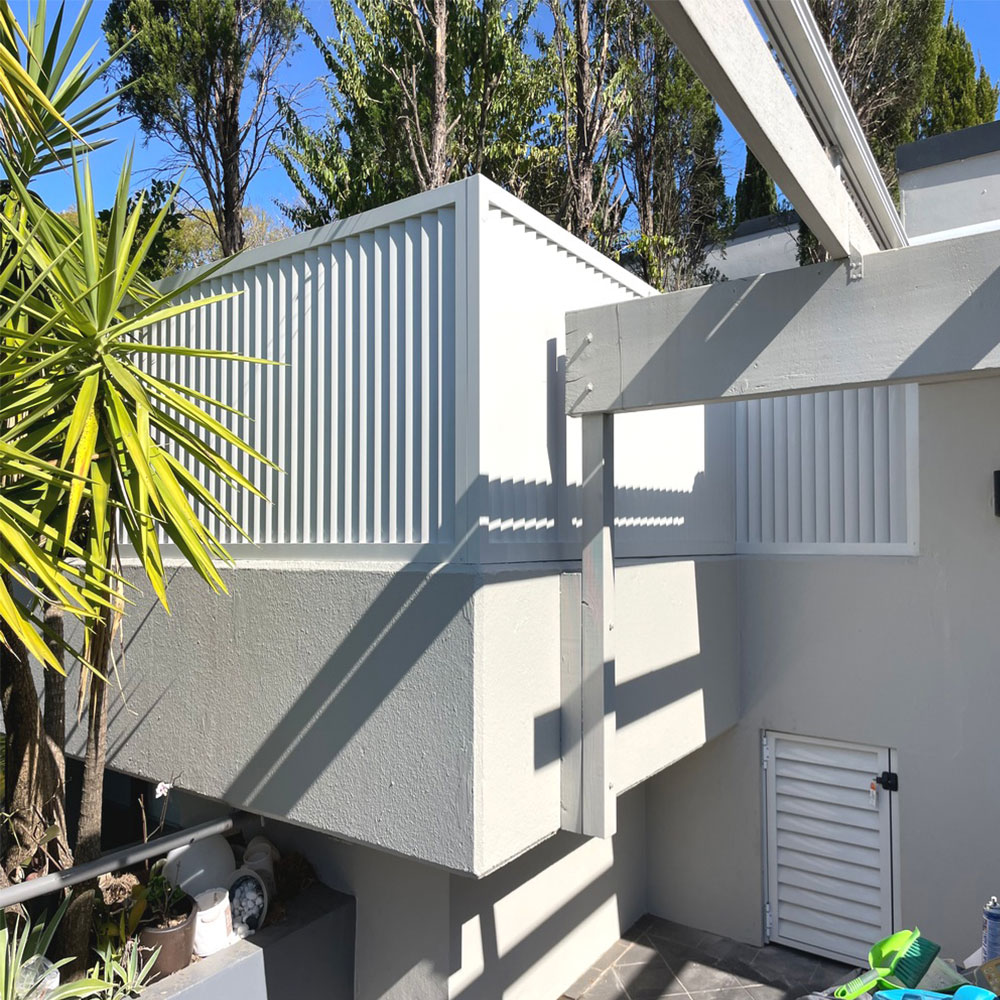
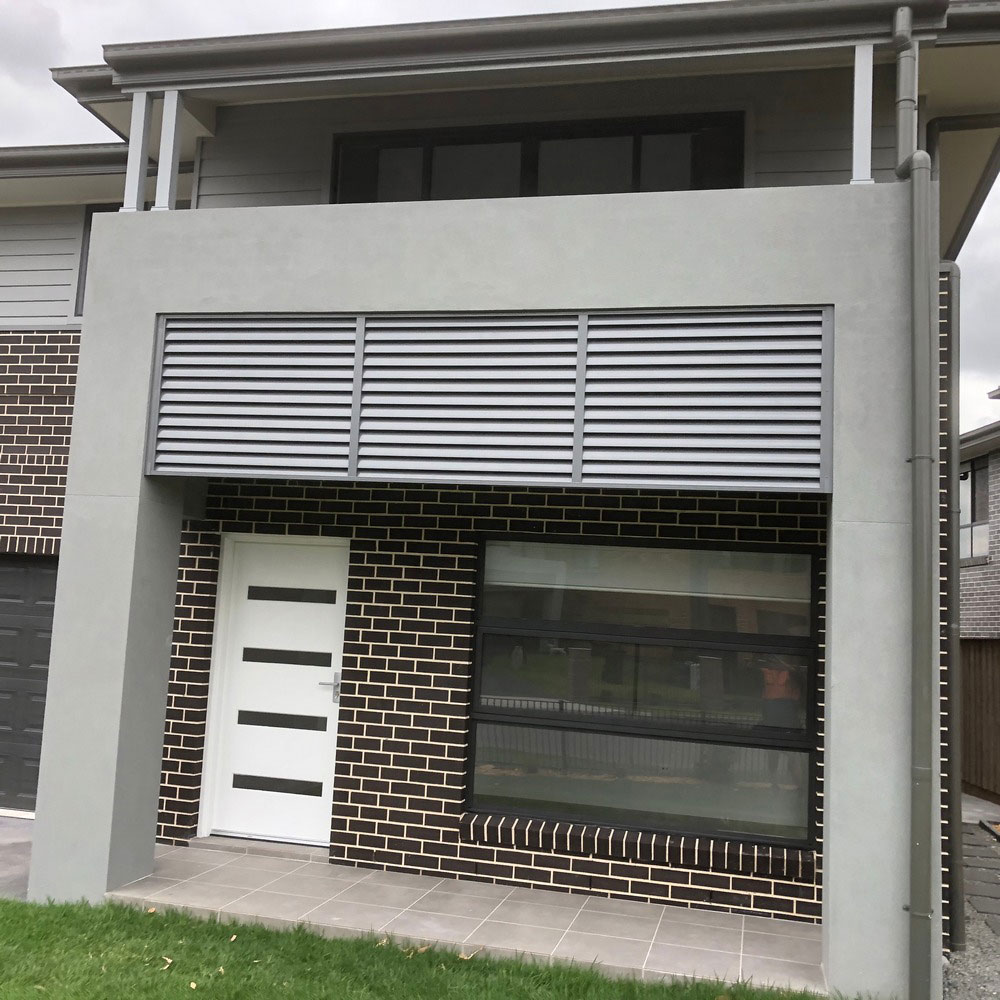
Horizontal or Vertical Installation

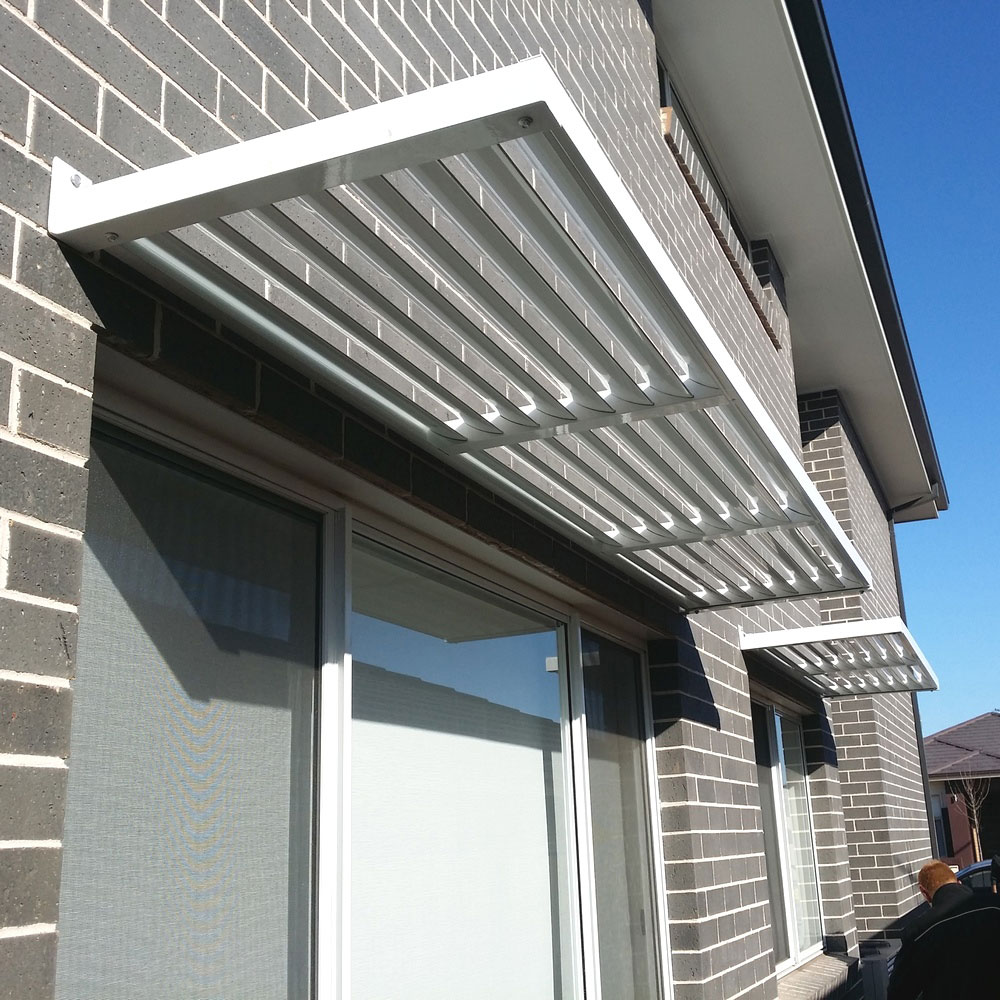
Flexible configurations for walls, posts, or freestanding screens up to 500mm in front of windows.
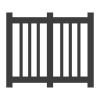
Optional Sliding Panel Systems

Ideal for patios, outdoor kitchens and verandas where airflow and access matter.

Powder-Coated in a Wide Range of Colours

Finished to suit your exterior palette, with long-term durability in all weather.
Privacy Screen Louvres

Gallery

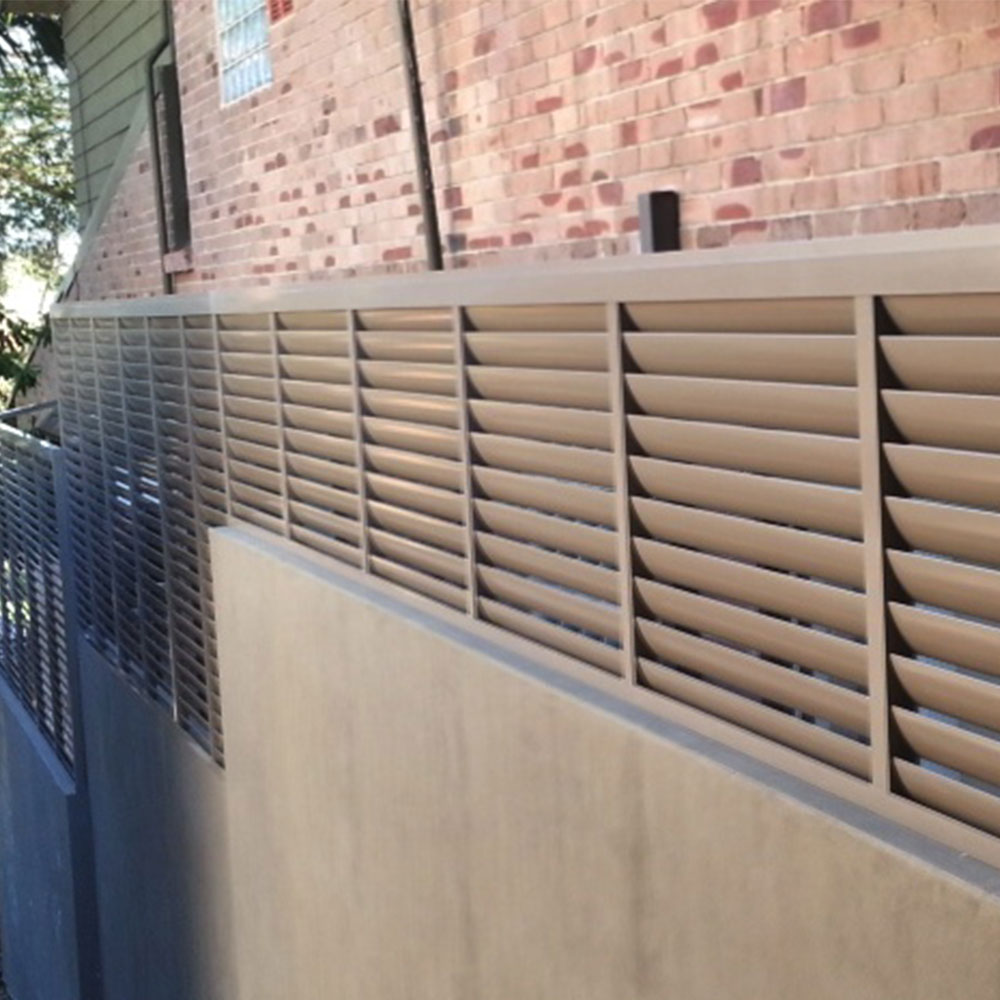
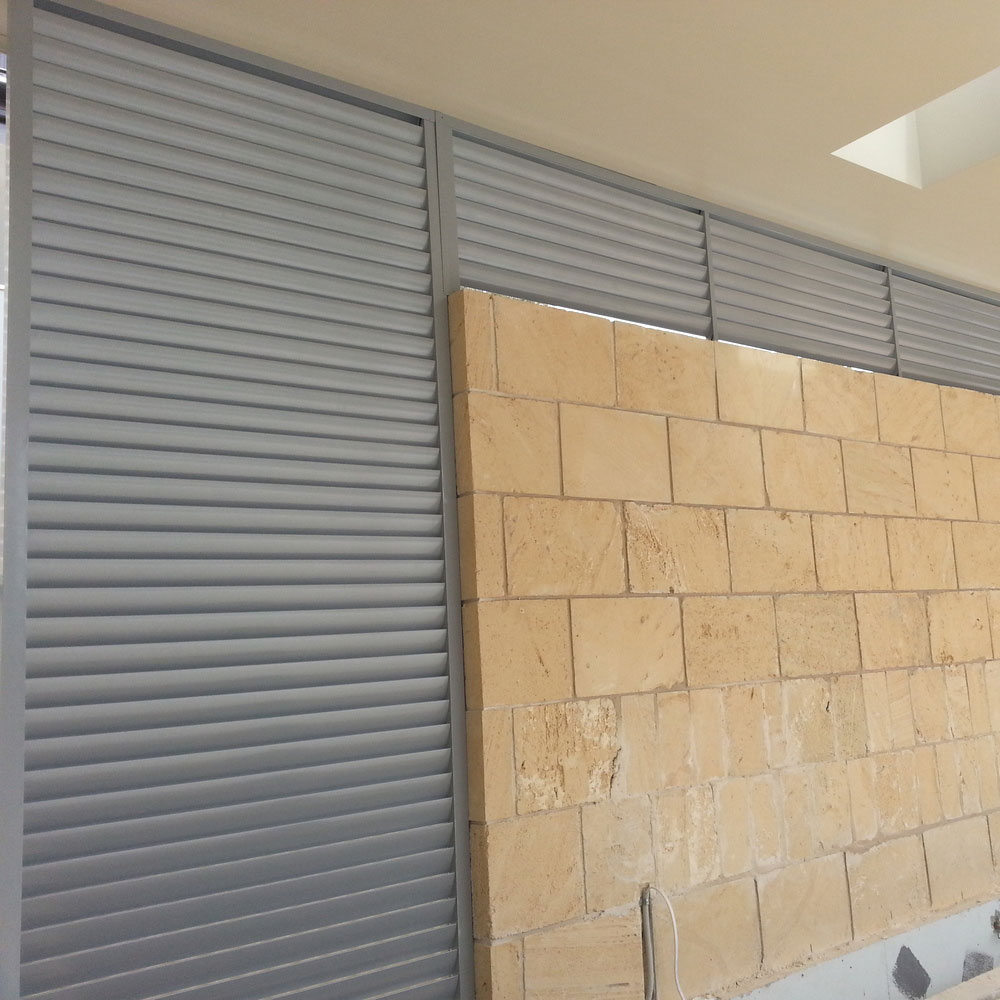
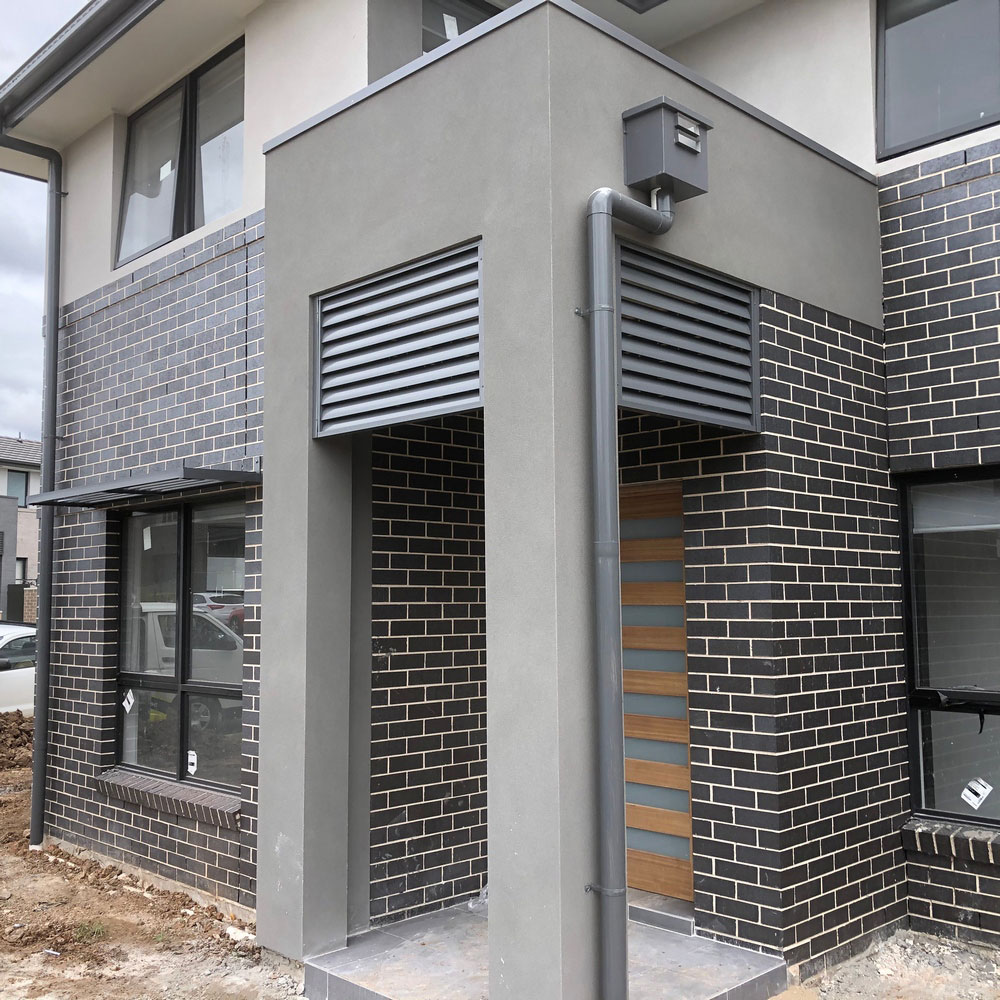
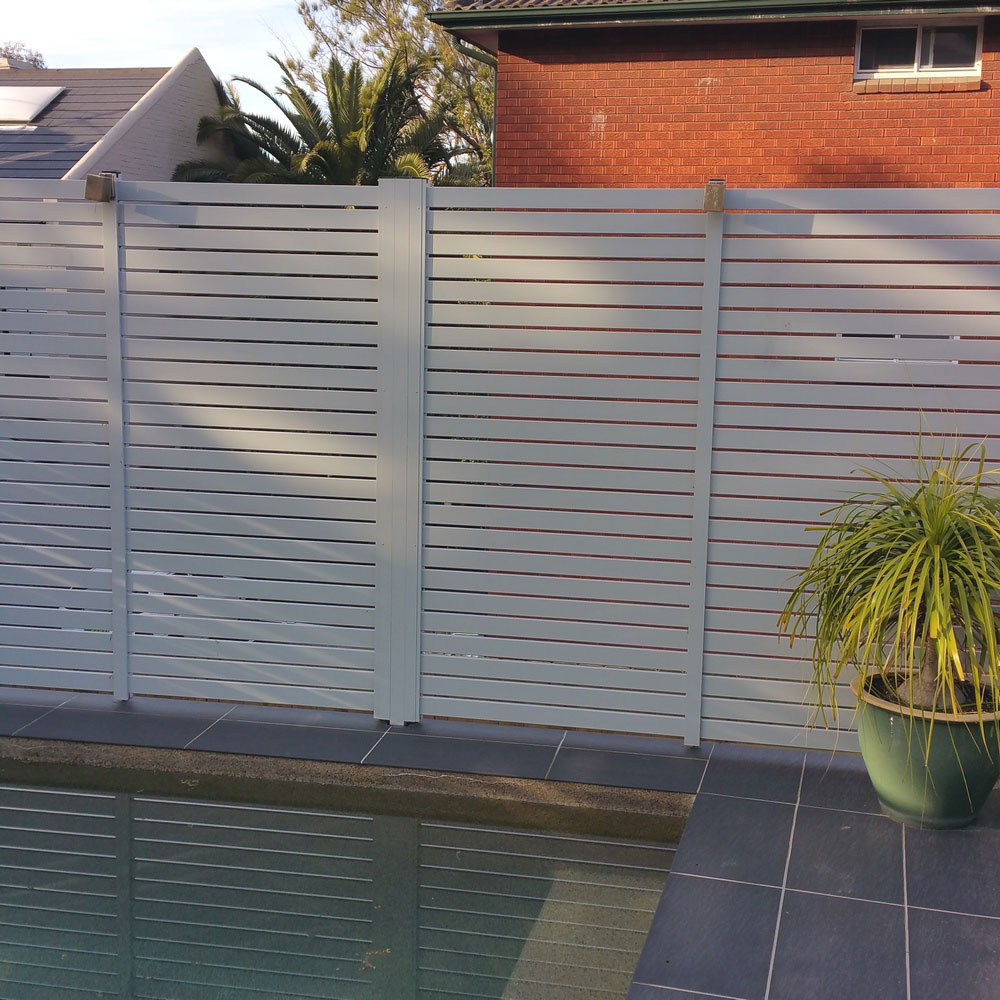
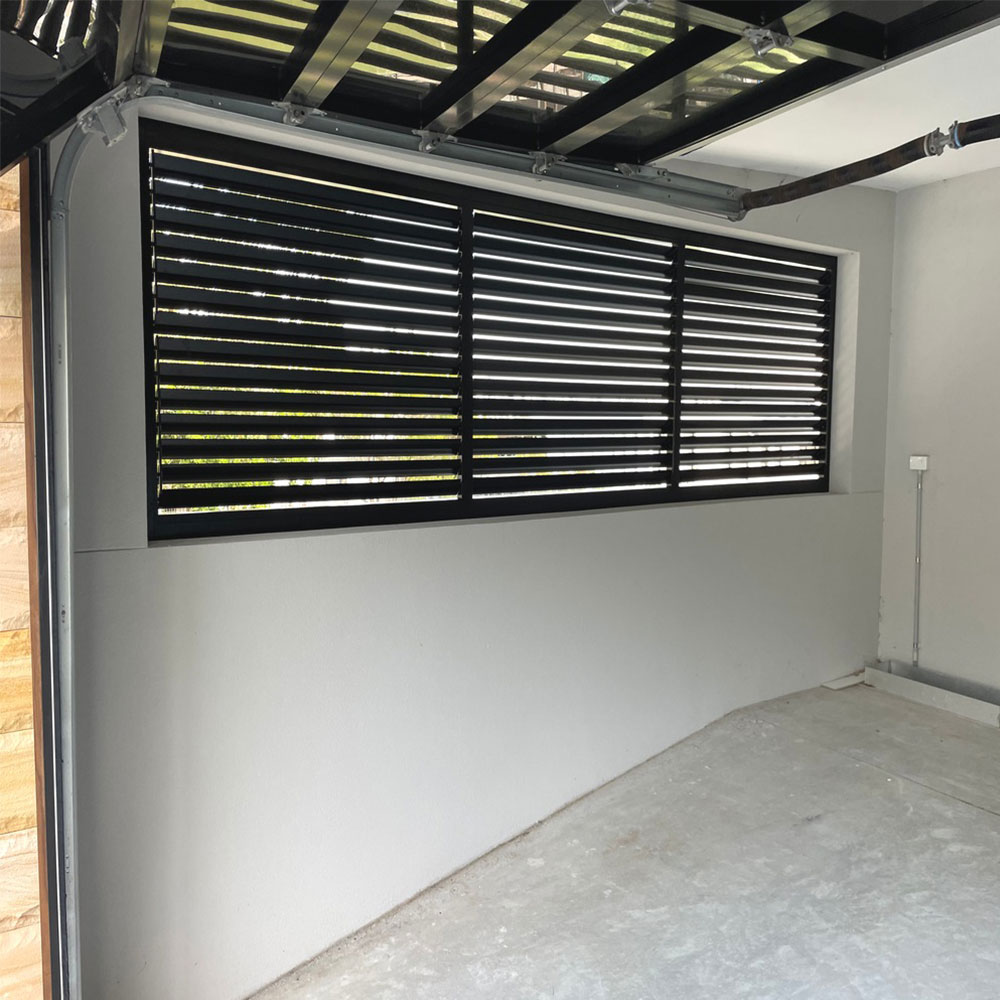
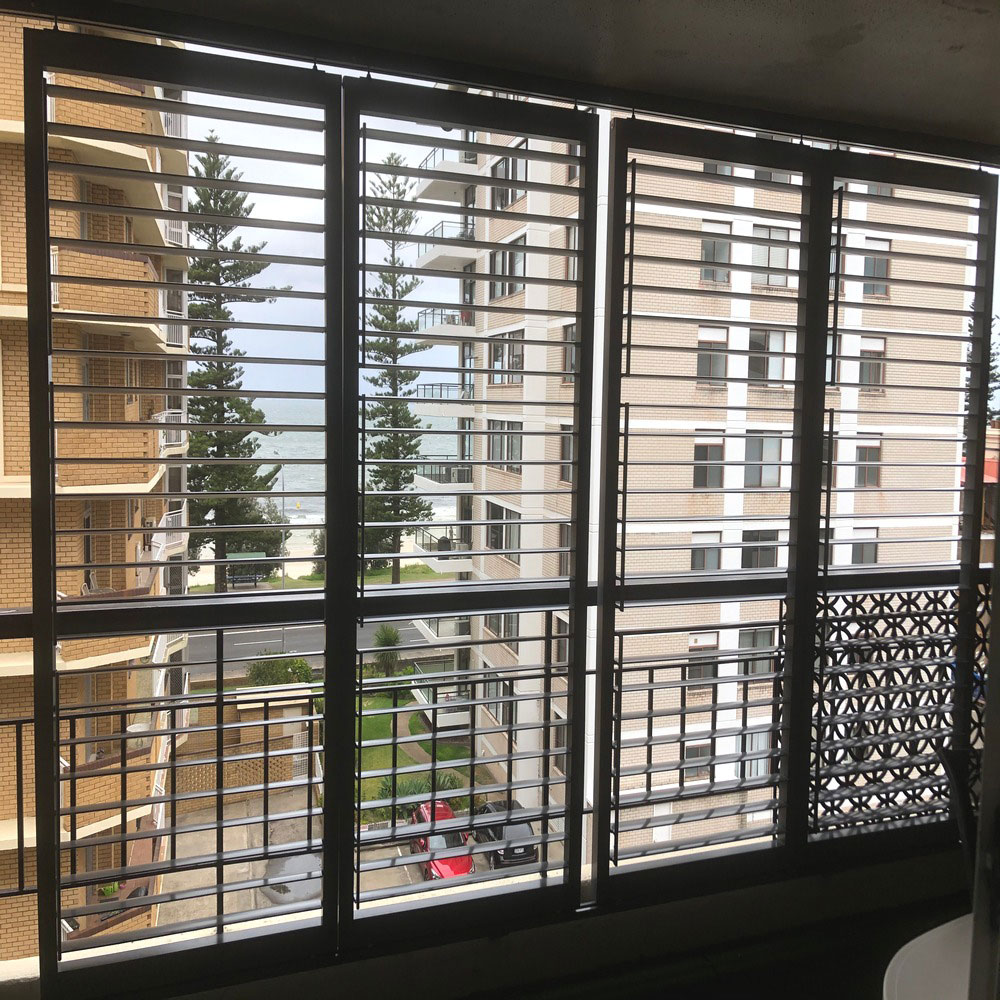
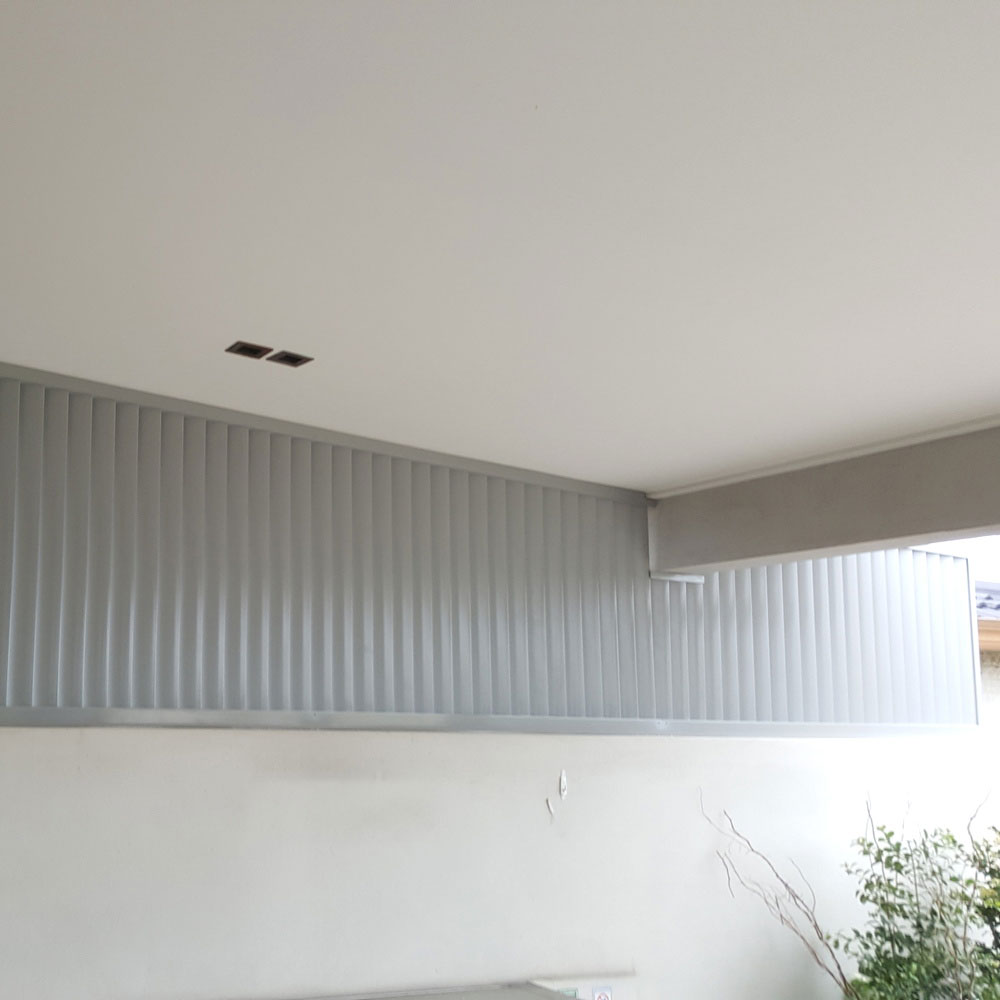
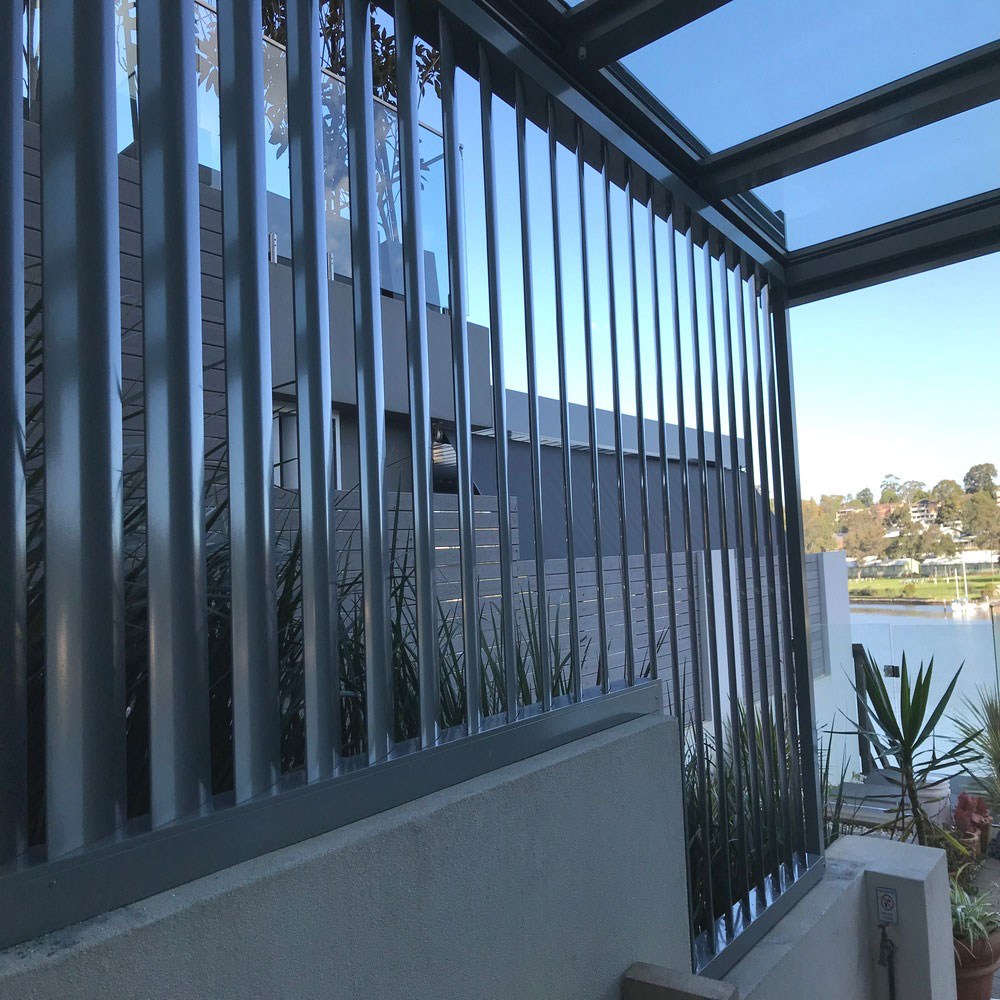
White privacy screen louvres behind an outdoor BBQ kitchen for privacy and airflow, Sydney made and supplied direct

Privacy Screen Louvres

Frame & Fixing Details

Privacy screens come in all shapes and sizes and can be fixed to all types of structures, including brick walls, timber framing, steel posts, or concrete surfaces. We custom-make all fixings to ensure a great result that’s easy for your installer to set up.

Whether you’re mounting to the side of a balcony or adding privacy to your BBQ area, our screens are made to suit. Louvres can be vertical or horizontal, with 85mm or 160mm blades, and are available in adjustable or fixed configurations — fully customised for your site and needs.

Installation Details

Fixing to Posts and Walls

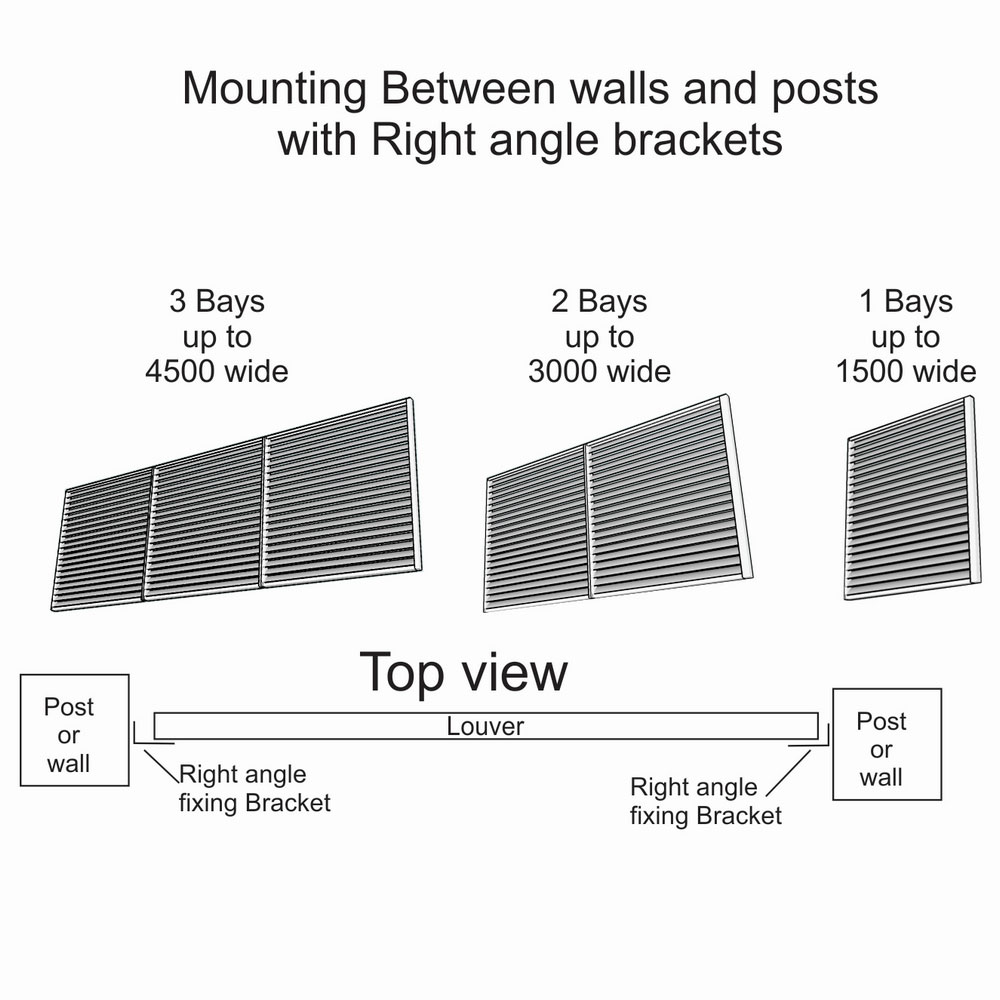
One of the simplest and most effective ways to install louvre screens is by using mounting angles fixed directly to your walls, posts, or ceiling. For setups such as wall-to-wall or post-to-wall installations, right-angle sections are secured to each side, and the louvre panel is then fixed to those angles. This creates a clean, reliable fixing method that’s easy to install.

Optional infill angles can be added at the top, bottom, or sides to neatly close off any gaps, depending on how the panel is positioned. The louvres are custom-made to suit your space, with a maximum span of 1500mm per bay for 85mm blades. For widths over 1500mm, panels are divided into multiple bays—typically two bays up to 3 metres, or three bays beyond that.


Fixing Using Mounting Brackets

We offer a wide range of mounting brackets designed to suit a variety of installation conditions, all of which can be customised to perfectly match your project. One of the most common and versatile options is the L-bracket, ideal when the louvre screen needs to stand off from the wall—such as in front of windows, downpipes, or where space is needed for ventilation or design clearance.

These brackets are typically fixed to the side of the louvre frame and then secured to your structure, providing a strong, stable fixing point with just the right amount of setback. Whether you’re fixing to brick, concrete, steel, or timber, we can custom-make the bracket dimensions, angles, and mounting holes to suit your needs.

All mounting brackets are manufactured in-house at our Sydney factory, ensuring high quality, consistency, and a seamless fit. This made-to-order approach ensures a clean, professional result with minimal on-site adjustments—making installation faster and more accurate.


Blade-to-Blade Sizing Explained

Louvre panel sizes increase in fixed increments based on blade orientation and size. These increments are measured from the first blade to the last blade and determine how the overall panel size increases as more blades are added.

  • Horizontal Blades (blades run side-to-side): The height of the panel increases in fixed steps. For example, with 160mm blades, the available panel heights might be 1616mm, 1766mm, 1916mm, and so on — each step adds one blade.
  • Vertical Blades (blades run top-to-bottom): The width of the panel increases in fixed steps. For example, with 85mm blades, the panel widths might be 881mm, 961mm, 1041mm, etc., depending on the blade overlap and spacing.

If your required opening doesn’t exactly match one of these standard increments, we’re happy to discuss the different options available to infill or close the gap. Because every louvre system is custom-made to suit each site, we can design the solution to fit your space as seamlessly as possible

Fixing to Brick or Concrete Walls

When fixing to brick or concrete, we use custom-made aluminium angles or brackets, secured with high-strength masonry anchors for a durable and stable installation. These components provide a solid mounting face for the louvre panels, whether you’re installing between walls, alongside a balcony, or in front of a window. On side walls, angles are typically used to create a flat surface for fixing the panels securely. As with any masonry fixing, it’s essential to ensure there is solid material behind rendered surfaces to achieve a reliable and long-lasting hold.


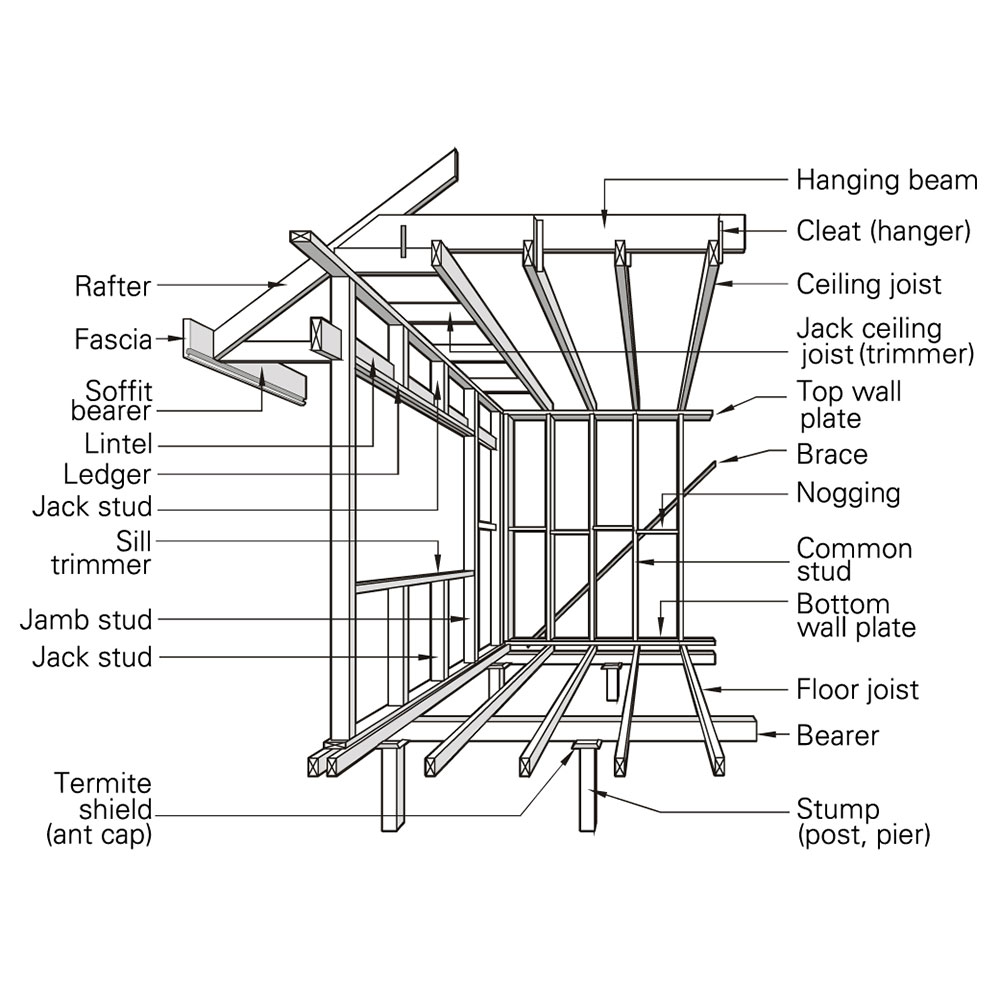
Fixing to Timber-Framed Walls

When fixing to timber-framed walls, it’s essential that all brackets or angles are secured directly into the structural studs behind the cladding, not the cladding itself. Our standard aluminium fixing angles can be used, but the integrity of the installation depends on anchoring into solid framing. If stud positions don’t align with the bracket layout, additional noggins or internal framing may be required. It’s ideal to plan mounting points before cladding is installed, and heavy-duty timber screws should be used for a strong, secure connection.

Installer Tip: If the timber framing is still exposed, it’s a great time to plan and measure the louvre layout early. Working out bracket positions ahead of time can save significant effort and cost later on. In many cases, it may be best to design the louvre size to suit the stud layout, rather than the other way around.

COMMON QUESTIONS

Privacy Screen Louvres FAQs

Can privacy screen louvres be installed in front of a window?

Yes — this is one of the most common uses. The screen mounts on standoff legs, usually about 200mm off the wall, so the window can still open and air can flow. The number of brackets depends on the size of the screen and where solid fixing points are available.

Do privacy screens need council or BASIX approval?

No — usually it works the other way around. Councils often require a privacy screen between neighbouring properties, and BASIX may require screening to reduce heat coming into the home. Our louvres are custom-made to meet those requirements.

How wide can a screen be before it needs extra support?

With 85mm blades, the optimum blade span is 1500mm per bay. Wider screens are simply divided into multiple bays — typically two bays up to 3 metres, three beyond that — so the screen can be as wide as your space needs.

THE FINISH

Learn About Our Powder Coating

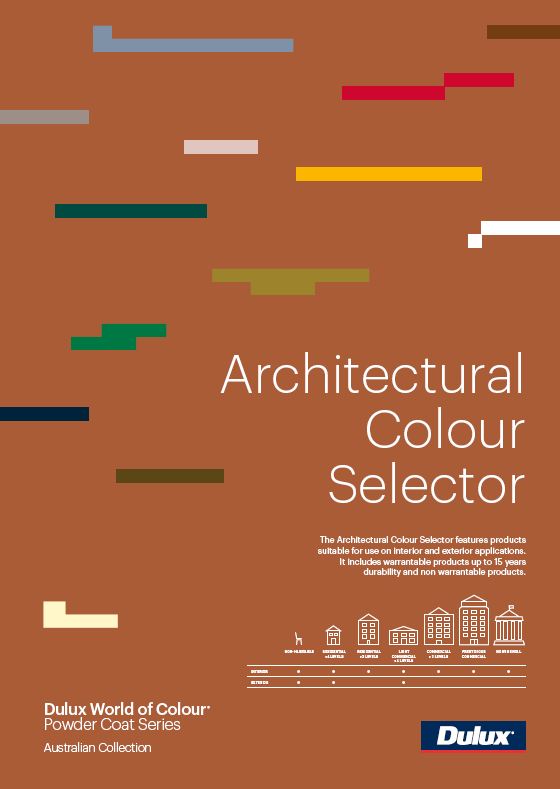
Every awning and louvre is powder coated before delivery — never painted on site. We use premium Dulux Duralloy® powders, the Australian architectural standard: a thick, uniform finish that resists chipping, fading and coastal weather far better than paint.

Six standard colours — no colour surcharge:

Satin Black

Pearl White

Monument

Woodland Grey

Shale Grey

Primrose

Prefer something different? Any colour from the full Dulux range can be matched — including every Colorbond®-matched tone.

Click here to learn more about powder coating →
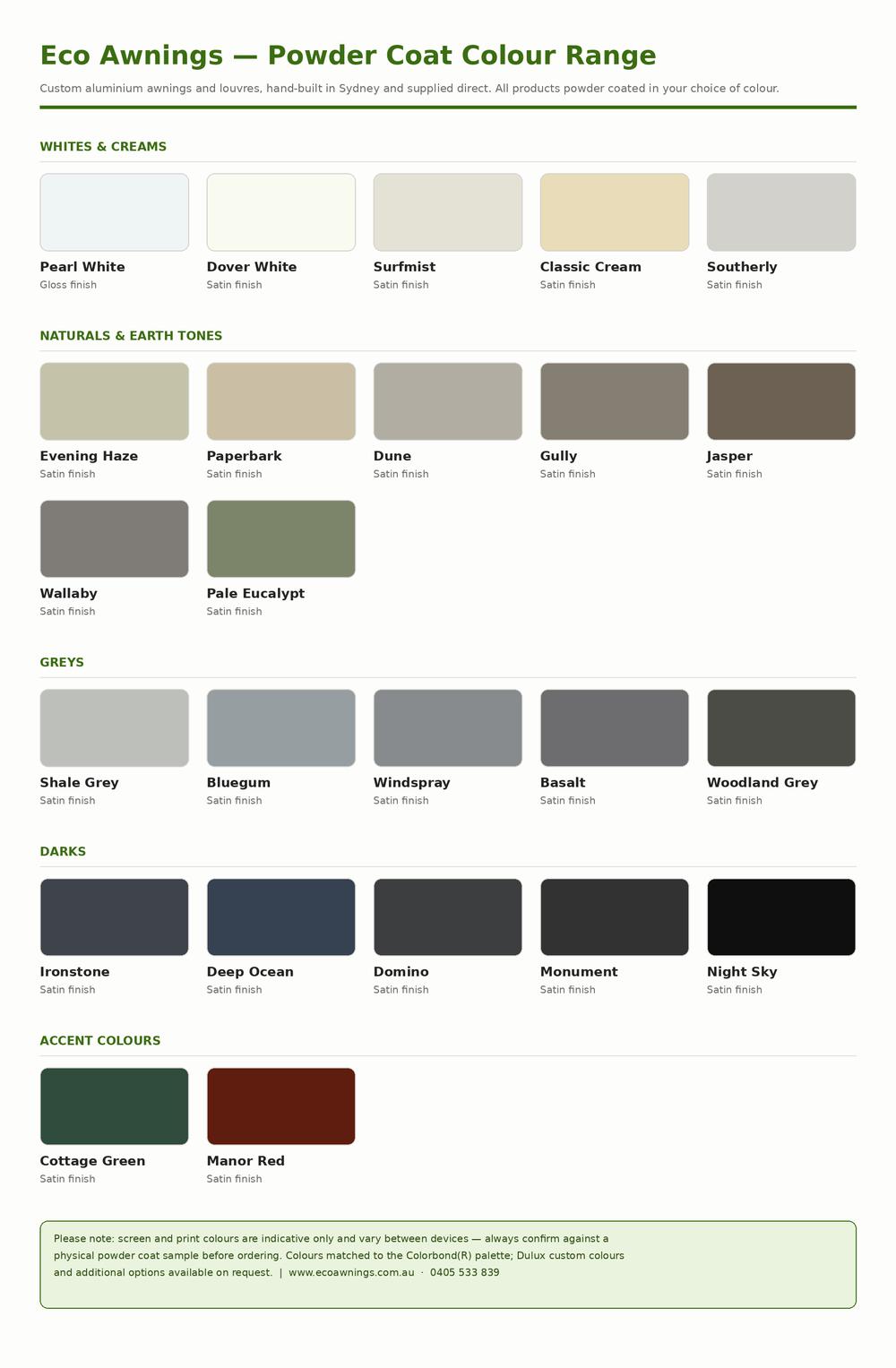
Eco Awnings powder coat colour range chart

POWDER COAT COLOURS

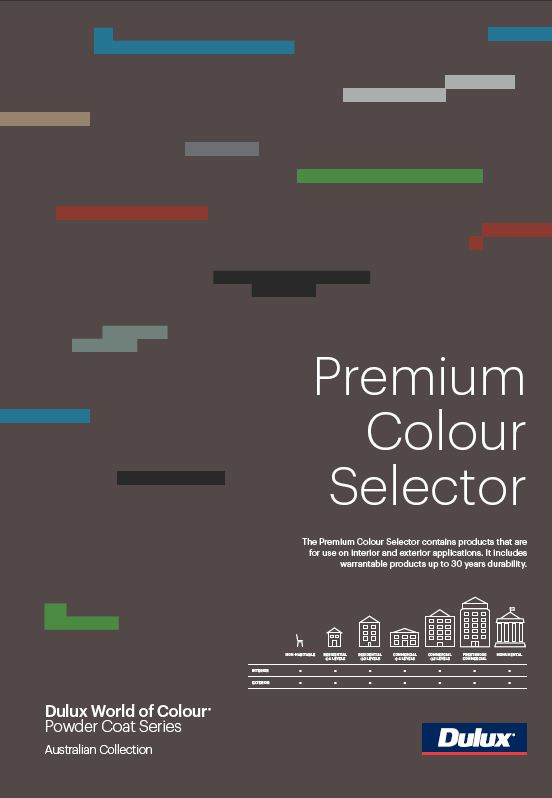
Powder Coat Colour Charts
NOT QUITE THE RIGHT FIT?

Explore the Louvre Range
Not sure which louvre suits your project? Compare the full range of aluminium louvres we custom-make in Sydney — or get a quote and we’ll recommend the right fit.

Manufactured in Sydney and supplied direct – custom-made for every project, with no middlemen and no delays.