
One of the most common wall framing systems in Australia is the timber stud wall frame — a structural framework of vertical studs and horizontal plates covered with cladding such as fibre cement board, weatherboard, or brick veneer. Understanding how a timber frame is built helps you identify the right fixing points when mounting an aluminium awning, louvre screen, or bracket system to your wall.
When installing an Eco Awnings product onto a timber-framed wall, you need to fix into solid timber — not just the cladding. The most common studs and framing members you can fix into are:
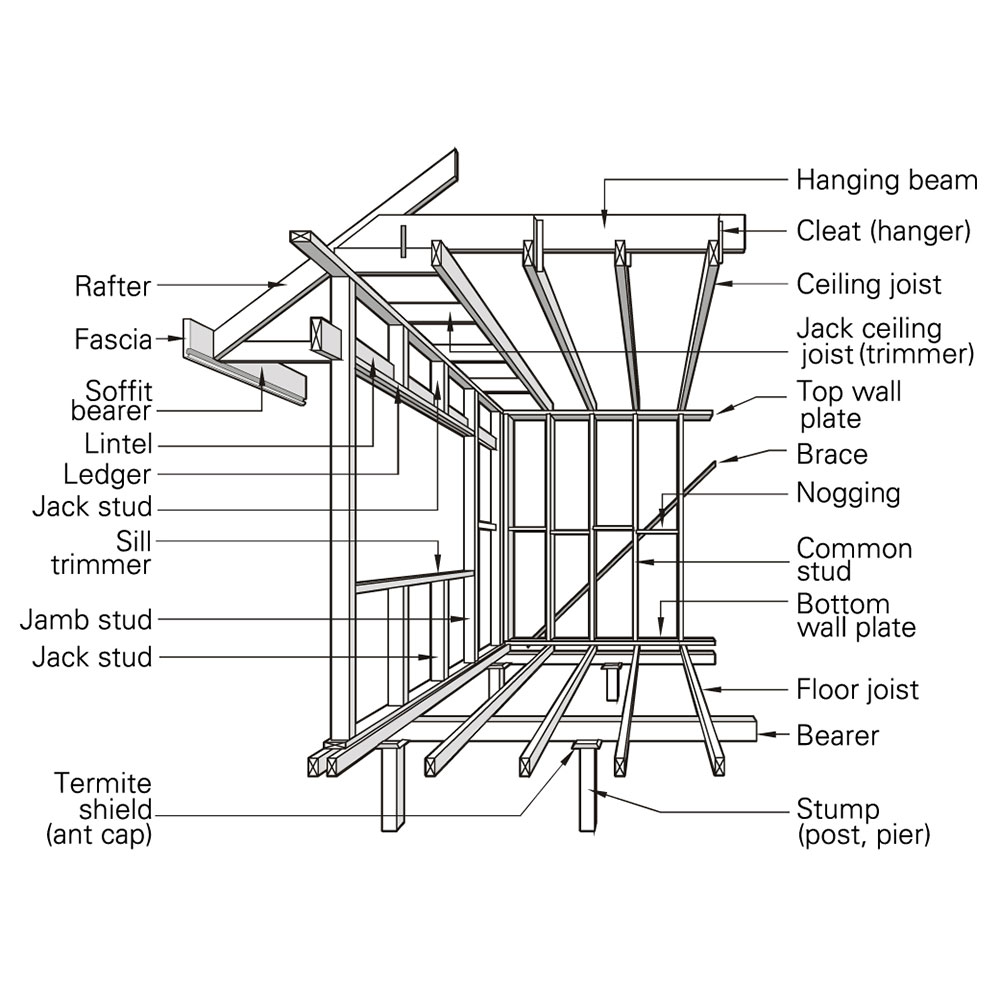
- Head trimmer — sits above a window opening, supports the structure above
- Top plate — horizontal timber along the top of the wall frame
- Jack stud — shorter stud cut to sit above or below an opening, supporting the lintel
- Nogging — short horizontal blocks between studs for extra support and rigidity
- Timber or metal bracing — diagonal members that prevent the wall from racking
- Sheet bracing — structural sheet material fixed to the frame for rigidity
Before mounting any awning or louvre bracket, always check what is behind your cladding at the fixing point. Use a stud finder to locate solid timber framing. If you are fixing into brick veneer over a timber frame, the brackets must pass through the brick and anchor into the timber studs behind. For cladded walls such as fibre cement or weatherboard, our Slimline 50 with cantilever arms is specifically designed to fix directly into timber studwork behind the cladding — the arms can be positioned anywhere along the frame to line up with your stud positions.
Need help identifying your wall type? Call Roland on 0405 533 839 or email sales@ecoawnings.com.au for advice on the best fixing method for your home.